7 Ways Lithuania Will Benefit from Buying Out the LNG Terminal Floating Storage Regasification Unit
2019-01-04
Company news
On 18 December, the Seimas adopted amendments to laws on the long-term operational prospects of the Klaipėda Liquefied Natural Gas (LNG) Terminal. What value will Lithuania receive by buying out the LNG floating storage regasification unit (FSRU) when the lease agreement ends for the ship in 2024?
Learn about the seven benefits in an informational video (Lithuanian language):
1. We save because we buy gas cheaper
Four years ago, gas was 25 per cent more expensive for Lithuanians because it could only be purchased from one supplier – Russia’s Gazprom. According to data from an analysis done by experts at the international Pöyry Management Consulting, since it started importing gas through the LNG terminal, Lithuania has been paying 20 to 60 million less for gas each year. The terminal also ensures that the price for the gas that Gazprom supplies by pipeline is competitive.
2. Additional revenue for the state and the population
According to KN CEO Mindaugas Jusius, we can use the LNG terminal not only for our own needs, but also to earn additional income. One such activity is bunkering. Smaller ships powered by LNG will be able to refuel from a special bunker vessel in the future. Tugboats can also use LNG as a fuel instead of diesel.
According to Mr Jusius, tugboats carrying LNG can transport gas where there are no pipelines, such as Druskininkai. An LNG station began to operate there in 2017 which stores gas reserves and ensures a gas source for the town. Lithuania will also be able to earn money by supplying gas to Ukraine and other Central European countries once the GIPL gas interconnection between Lithuania and Poland that is being funded by the European Union is completed in 2021.
3. We will be sure that we will have gas during the cold winter
There are currently two ways that Lithuania can get gas: from Gazprom via the pipeline through Belarus, or from any LNG seller worldwide through the Klaipėda LNG Terminal. That means that if one means of supply is cut off, there is always another. Lithuania does not have gas storage facilities large enough to hold the amount of gas needed to heat flats and houses and keep industrial plants running for the entire winter.
According to CEO of KN, we can recall the story of the Druzhba pipeline, when Russia unilaterally closed the pipeline that was supplying oil to Lithuania in 2006: “It’s a good thing that Lithuania already had a lifeline – the Būtingė oil terminal. For 12 years now, this is the only way for oil to get to Lithuania.”
4. Dissemination of LNG terminal industry knowledge in Lithuania
Klaipėda University is currently the only school in the Baltic Sea Region preparing LNG terminal engineering specialists. This study programme was launched in 2016; 18 students are currently studying LNG engineering, of which three are doctoral students who are already preparing dissertations in the field of LNG. According to exploratory research conducted by Klaipėda University, some 17–22 LNG terminal engineering graduates will be needed every year with the expansion of LNG activities in the Baltic Sea Region.
5. International cooperation in the fields of energy, education and science, and business
An LNG cluster has been operating in Klaipėda for more than two years already which unites 14 members, including solid international partners such as Emerson, SGS and DNV-GL. The cluster aims to ensure effective international cooperation in the fields of energy, education and science, and business.
The members of the cluster initiated the establishment of the LNG Competence Centre, where our country’s scientists now work, and Emerson, the American automation solutions corporation, has donated modern automated equipment, thus becoming the first major supporter in creating the Competence Centre training infrastructure.
6. More flexibility in making decisions on how to use the floating storage regasification unit
Various international studies show that global demand for LNG terminals is growing: Germany is building two new terminals, Poland is expanding the Swinoujscie LNG terminal, and Russia has completed construction of an LNG import terminal in Kaliningrad. Import terminals are also being built by Panama, Bangladesh, the Philippines and Qatar.
“If various possible circumstances change, Lithuania will always be able to sell or rent the purchased floating storage regasification unit to other countries,” believes Mr Jusius.
7. The world and Lithuania – with LNG
According to data from Bloomberg New Energy Finance, LNG is already becoming an integral part of the modern world. And Lithuania is becoming an important player in the global LNG market. By 2030, LNG demand will grow worldwide and in Europe as well – from 200 million metric tonnes per year in 2018 to 250 million metric tonnes per year 12 years later.
On 5 January 2026, the Ministry of Energy of the Republic of Lithuania announced the selection of candidates for the members of the Board of KN Energies. The selection of the members of the Board shall be carried out in accordance with the Description of the Selection of Candidates to...
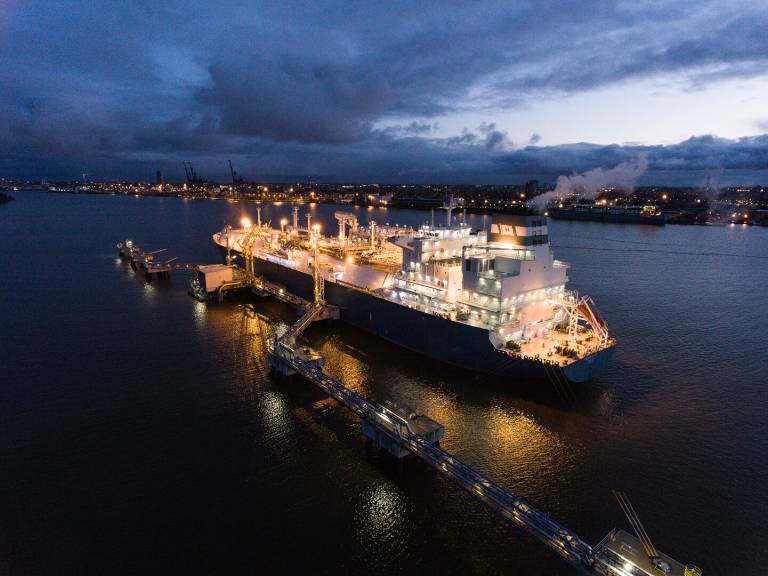
On Monday, a liquefied natural gas (LNG) cargo from the United Stats of America ordered by D.TRADING International SA, a subsidiary of DTEK Group, the largest private Ukrainian energy company, reached the Klaipėda LNG terminal operated by the international terminal operator KN Energies. Approximately 160 thousand cubic metres of U.S....
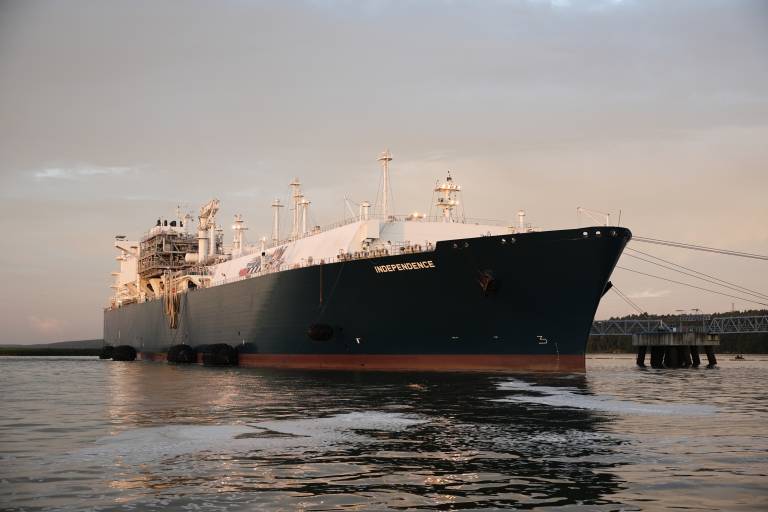
Exactly 11 years ago, on 27 October 2014, the liquefied natural gas (LNG) floating storage and regasification unit (FSRU) Independence reached the Port of Klaipėda. Lithuania’s liberation from the grip of a monopolist became not only an inspiration for the Baltic region but also ensured energy security and the right for consumers...