An energy project that became a global export of expertise
2025-12-29
Comments
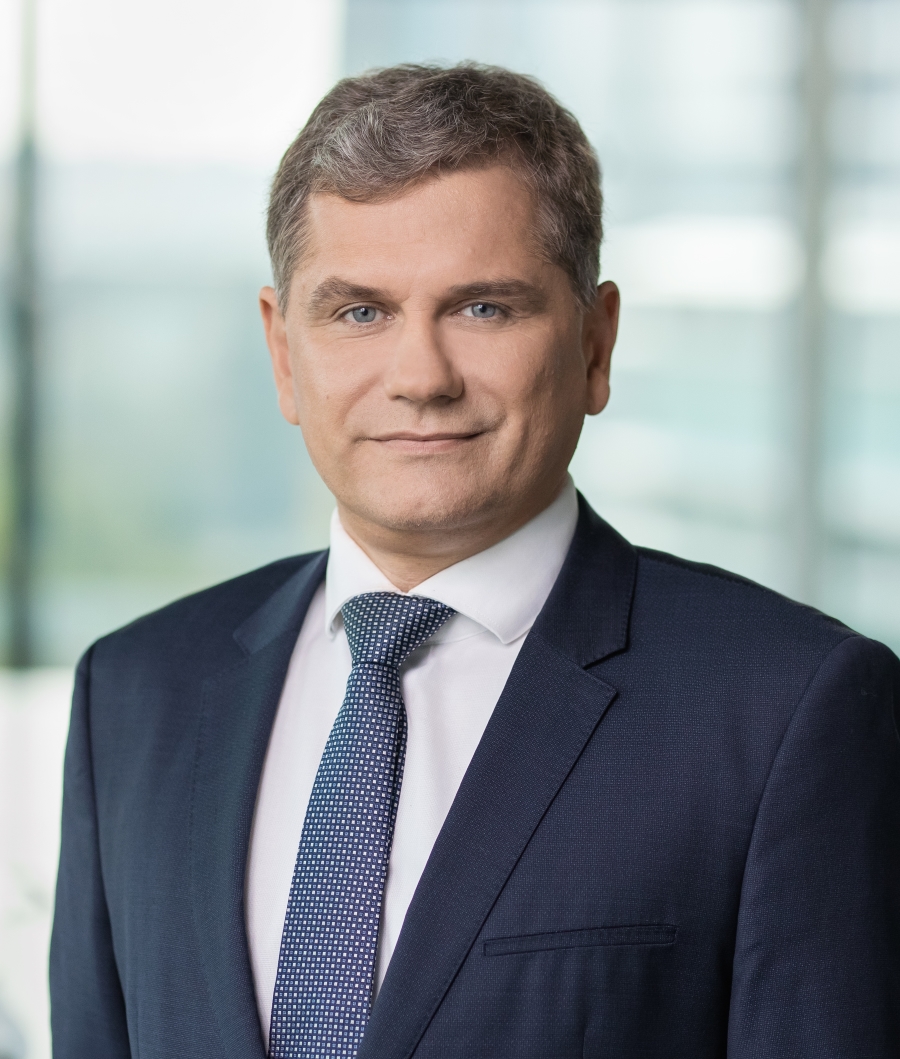
Dr. Linas Kilda, Chief Business Development Officer at KN Energies
Fourteen years ago, when a team of three people sat down to draft the plans for the Klaipėda liquefied natural gas (LNG) terminal, international expansion was not on anyone’s mind. Not politicians, not the market, and not us. The task was clear and very practical: to ensure that Lithuania had an alternative source of gas supply and was not dependent on a single route. It was a project of infrastructure, security, and national resilience. Not a business development strategy.
Yet this is where the first lesson for business lies: ambitious, complex projects almost always create more than was initially planned. The only question is whether you can see it.
The development of the Klaipėda LNG Terminal was “learning by doing” in the most literal sense. At the time, there was virtually no accumulated market experience on how floating LNG terminals of this type should be built – let alone operated. There were no clear models and no “best practice” manuals. There were only a very specific deadline, stringent safety requirements, and responsibility that could not be outsourced to anyone else.
We did what many organizations do in such situations: we searched for knowledge wherever we could find it – speaking with consultants, academics, infrastructure developers, and operators of similar facilities in different countries, combining diverse experiences into a single, functioning system. And very quickly we realized one thing: there were simply no independent floating terminal operators on the market whose experience and capabilities one could rely on once the project was completed.
At the time, this seemed like a problem. Only later did it become clear that it was also an opportunity.
After the successful completion of construction and commissioning at the end of 2014, the Klaipėda LNG Terminal became widely recognized as one of the very few LNG projects delivered according to the original schedule. Its visibility grew even further because from the very beginning the terminal was designed as an open, multi-user, multi-service infrastructure – an approach that at the time was a major global innovation. We started with a single client in 2014, and today the terminal is shared by seven clients.
Moreover, we were the first in the world to adapt a floating terminal – responding to client needs – for the reloading of smaller LNG volumes, both to small-scale vessels and to LNG trucks, thereby expanding the terminal’s role beyond “classic” wholesale supply. We continue to innovate and to seek solutions that respond to customer needs and contribute to sustainability: we launched the electrification project of the FSRU Independence and offer clients a virtual liquefaction service for biomethane.
The first signals that our experience might be needed beyond Lithuania appeared quite quickly – before we had even had time to “cool down” from the Klaipėda LNG Terminal project. Developers from other countries began approaching us with very similar challenges: how to prepare for the operation of a floating LNG terminal, how to structure commercial relationships, how to reduce risks, how to start operations on time and without mistakes.
This is how the first international consulting engagements began. Without grand strategies or plans, without international ambitions. We simply responded to a concrete market need.
KN Energies’ first international engagement was in Colombia, in a similar floating terminal project. At the time, we were not actively looking for such opportunities – the project developer, already aware of our strong reputation in project management, asked us to help prepare for operations. Teams of engineers and operators traveled to Colombia, and Colombian specialists were brought to Klaipėda for training. This engagement clearly demonstrated that there was an international LNG market that needed our services.
The Brazil story was a consequence of growth. There, we were invited to provide terminal operations services – a reliable partner was needed to manage critically important infrastructure for one of the largest energy projects in Latin America (the LNG terminal supplies gas to two power plants with a combined capacity exceeding 3 GW). This required not only advising the developer but also being physically present, gathering a local team, transferring knowledge, and establishing operational processes. A different culture, a different pace of work, a different perception of risk. It was a test not only of our technical capabilities but also of our organizational maturity.
One of the most interesting examples is Germany. A country with a strong engineering culture and a vast competence base did not, at first glance, appear to be a market in need of experience from a small Baltic state. But energy reality changed faster than stereotypes. When the war in Ukraine began and supplies of “cheap” Russian gas were cut off, Germany suddenly needed solutions here and now – not in ten years, not theoretical ones, but operational ones.
Our path in Germany began with very small steps – short, focused consultations. No grand declarations, no attempts to “enter through the front door.” We simply aimed to demonstrate through our work that we could deliver what we promised: on time, precisely, and without unnecessary complexity. Consultations turned into services. Services turned into operations. KN Energies’ role in Germany expanded significantly after winning the consolidated tender for commercial operations of all four state-owned German LNG terminals. LNG projects are currently being developed in Brunsbüttel, Stade, and two terminals in Wilhelmshaven. At the Wilhelmshaven 2 LNG terminal, we provide not only commercial but also technical operation services.
At the same time, the geography of our consulting activities expanded. Today, we are talking about more than ten countries – from Europe to Latin America. Often these are projects we cannot discuss publicly due to confidentiality, but the logic is always the same: the market is not looking for theoretical advice, but for experience that has already been tested in real conditions, and for innovative solution providers who truly understand this narrow and highly specialized field.
Importantly, this international activity has never been separated from Lithuania. KN Energies remains a state-owned company, and a significant share of profit – now accounting for roughly one third – is generated precisely through this export of expertise. This means that experience developed while addressing local challenges today creates direct value for the people of Lithuania.
Innovation, therefore, does not necessarily originate in laboratories or startup ecosystems. Very often it develops within organizations when teams are forced to solve complex, uncomfortable, and insufficiently defined problems. But for this experience to become valuable to the world, it takes courage to name it and discipline to turn it into a marketable offering.
A story that began with a very concrete responsibility to Lithuania has evolved into activities on two continents. Today, we are proud to be well known to all FSRU owners, major LNG shipping companies, and energy companies such as BP, Shell, ExxonMobil, Equinor, and others. We hold approximately 6–7% of the global floating LNG terminal market – enough to feel confident, but not enough to stop. Therefore, beyond Europe and South America, we are already looking toward a third continent: Asia. And this is the key lesson: international growth does not necessarily mean leaving the home market. Sometimes it is simply its natural continuation.
If we want more Lithuanian companies to be visible and competitive globally, we must start by asking: what experiences do we already have today that we have not yet allowed to move beyond our organizational walls? Working with many international partners, developers, and clients, it is genuinely encouraging to see the diligence and results-oriented mindset of Lithuanian professionals – qualities that are highly valued in today’s labor market. On the other hand, there is often a tendency to underestimate our own capabilities and competencies. For this reason, I would encourage Lithuanian companies to turn more boldly toward global markets and to more actively showcase the experience and expertise we have built.