KN Commences Allocation of Klaipėda LNG terminal Capacities
2023-09-15
Klaipėda LNG terminals
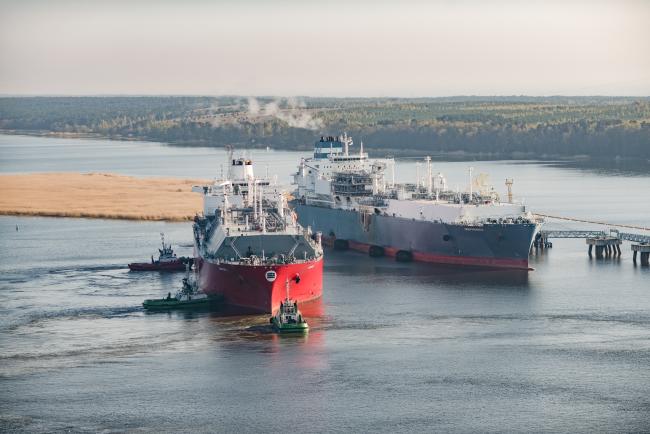
Klaipėdos Nafta (KN), Klaipėda LNG Terminal Operator, will offer the market 9 TWh of the LNG terminal regasification capacities for the period from 2025 to 2032 (inclusive) and from 2033 onwards. Booking long-term regasification capacities ensures long-term occupancy of the LNG terminal and reduces its maintenance costs. The capacity allocation procedure begins on the 15th of September.
"Russian invasion of Ukraine caused an energy crisis, due to which the demand for natural gas increased to unprecedented heights not only in Lithuania, but also in the entire European Union (EU). The changes related to the European Green Deal also increase the demand for LNG in the Community.
By the way, operation of additional infrastructure started in Lithuania, helping to meet this need: last year, the Gas Interconnection Poland-Lithuania (GIPL) was completed, and the capacity of the gas pipeline between Latvia and Lithuania was also significantly increased. Therefore, there are technical possibilities to supply more gas to a larger number of customers from the Klaipėda LNG terminal. As a result, we are recording considerable interest in the capacities of our terminal," comments Mindaugas Navikas, Chief Commercial Officer of KN.
The National Energy Regulatory Council approved the updated allocation model at the end of July. It envisages the possibility of booking an additional 9 TWh of regasification capacity annually from 2025 to 2032 (inclusive). These capacities will be allocated in 3 lots of 3 TWh each. Higher capacities – up to 28 TWh – are intended to be offered for the period from 2033 to 2044. They will be divided into 7 lots of 4 TWh each.
It Will Ensure Occupancy and Lower Maintenance Costs of the Terminal
According to Mr. Navikas, the energy transformation currently taking place in the EU encourages more and more companies to look for stable and long-term natural gas supply solutions.
"Considering the changes, we will give the market participants the opportunity to book capacities from 2033 as well. In this way, companies planning a long-term perspective will be able to secure stable access to infrastructure, take advantage of long-term contracts to purchase natural gas at more favourable prices, and reduce the uncertainty of the operating environment," says KN's Chief Commercial Officer.
KN receives inquiries both from market participants located in our region (Latvia, Estonia, Finland, Poland), and from market participants located further away (the Czech Republic, Ukraine, Norway), or from world-class natural gas trading companies. Therefore, there is no doubt that the capacity allocation procedure, especially for capacity allocation until 2032, will be competitive.
"Our goal is to ensure that the LNG terminal operates at full capacity in the long term. The higher is the occupancy of the terminal, the lower are its maintenance costs, because every company using the terminal pays a fee for the regasification service," tells Mr. Navikas.
Fifty Percent of Revenue Comes from Foreign Customers
The annual allocated capacity of the LNG Terminal is 32-34 TWh, of which 24 TWh has already been reserved for the period from 2023 to 2032 (inclusive). Another 9 TWh will be allocated shortly through the terminal capacity allocation procedure. Part of the capacity, as before, is left for spot cargoes. During the procedure, market participants will have the opportunity to book capacities from 2033 onwards – up to 28 TWh is expected to be allocated for this.
The Klaipėda LNG Terminal is the main channel for natural gas entering Lithuania. By allocating long-term capacities, KN ensures that market participants will use not only the terminal, but also the natural gas transmission infrastructure in Lithuania. Part of the imported natural gas is allocated to the needs of Lithuania: domestic consumers and companies, part goes to other European countries or is stored in the Inčukalns underground gas storage in Latvia.
Each company using an LNG terminal pays a regasification service fee. As a result, the LNG Terminal is earning about 50 percent of its revenue from foreign customers this year. If the long-term allocation of capacity is ensured at that time, the part of the LNG terminal operating costs is equal to zero in the security supplement paid by natural gas consumers in Lithuania. A long-term capacity allocation model should allow such pricing to continue.
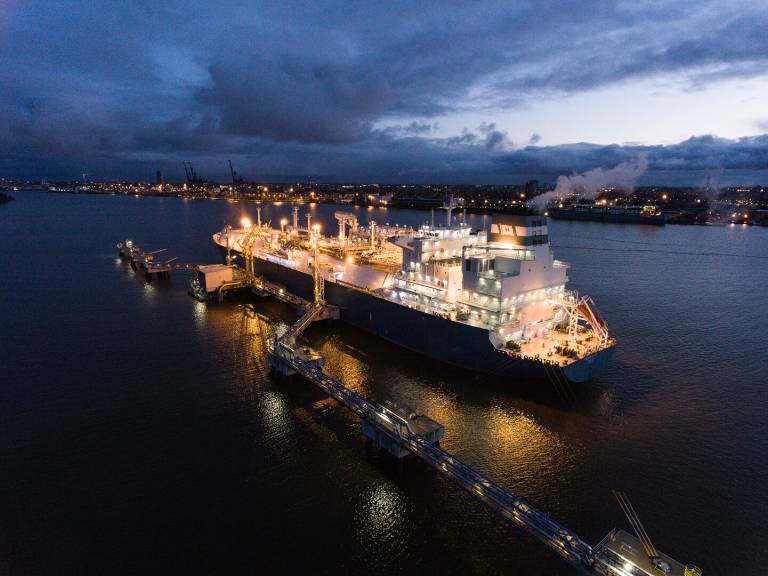
On Monday, a liquefied natural gas (LNG) cargo from the United Stats of America ordered by D.TRADING International SA, a subsidiary of DTEK Group, the largest private Ukrainian energy company, reached the Klaipėda LNG terminal operated by the international terminal operator KN Energies. Approximately 160 thousand cubic metres of U.S....

Klaipėda LNG terminal operator, SC KN Energies (hereinafter referred to as the Company), informs natural gas market participants about the planned allocation of SPOT LNG cargo capacity of the LNG terminal under the conditions specified below. The Company, taking into account the provisions of the Regulations for the Use of...
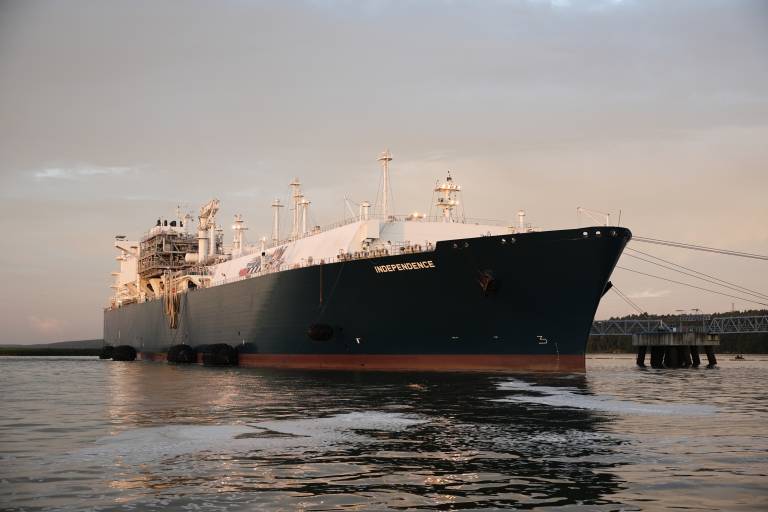
Exactly 11 years ago, on 27 October 2014, the liquefied natural gas (LNG) floating storage and regasification unit (FSRU) Independence reached the Port of Klaipėda. Lithuania’s liberation from the grip of a monopolist became not only an inspiration for the Baltic region but also ensured energy security and the right for consumers...