
Klaipėda LNG terminal for energy security and business opportunities

Klaipėda LNG terminal capacity is available to users who meet the specified requirements and follow transparent procedures. Review the key requirements, submit an application with the required documents, and sign the contract – the steps below set out a clear procedure to guide you through the process.

How to Become a Terminal User

As the operator of the Klaipėda LNG terminal, KN Energies enables interested parties to conclude regasification capacity agreements by acquiring different types of regasification capacity.

Allocation of Long-term Terminal Capacities

Long-term Terminal Capacities cover only LNG Regasification Capacities. The Operator allocates them for periods of no less than five years. The conditions for the use of such capacities are set out in the Regulations for Use of the LNG Terminal.

  • The Operator has allocated all Long-term LNG Regasification Capacities until 2033.
  • For the period from 2033 to 2044, the Operator has allocated 4 TWh of LNG Regasification Capacities per year.
  • Any Long-term Terminal Capacities that remain available for the period 2033–2044 may be allocated in a separate procedure.
  • Specific conditions for the allocation and use of Long-term Terminal Capacities will be published prior to the announcement of such capacities.
Allocation of Annual Terminal Capacities

The Operator may allocate Annual Terminal Capacities during the current year for the following calendar year or for several consecutive calendar years. When all Long-term Terminal Capacities are booked, the Operator may offer up to 4 LNG cargoes per calendar year to customers. The exact number of cargoes to be allocated depends on the planned maintenance schedule of the Terminal and the Transmission System Operator, as well as other operational constraints.

  • During the Annual Terminal Capacity Allocation Procedure, the available Free Capacities are allocated in accordance with the conditions set by the Operator.
  • The official invitation to submit Requests and book LNG Terminal Capacities for the upcoming year or a longer period is published annually on 1 July on the KN Energies website.
  • Requests are accepted within the time limit specified in the invitation.
  • Requests that do not meet the conditions indicated in the invitation are assessed only if no Requests have been received that comply with the invitation conditions.
  • Within 3 Business Days, the submitted Requests are evaluated according to the established criteria, and decisions are taken in a transparent and objective manner.

Allocation of Spot Market Capacities

Spot Market Capacities for LNG regasification or LNG reloading are allocated by the Operator if unbooked and Free Terminal Capacities remain after the Long-term and Annual Terminal Capacity Allocation Procedures.

  • These Terminal Capacities are allocated during the year when Free Capacities are available.
  • The Operator constantly updates and publishes possible Spot cargo Arrival Periods together with LNG regasification or LNG reloading capacities.
  • The official Invitation to submit Requests and book LNG Terminal Capacities is published on the Operator’s website.
  • The detailed Spot cargo and LNG reloading capacity allocation procedure is set out in Section IV of the Regulations for Use of the LNG Terminal.

Allocation of LNG Reloading and/or Biomethane Liquefaction Capacities

  • Requests for LNG reloading Services shall be submitted 25 days before the first day of the month in which the operation is planned.
  • If the Operator’s Invitation to book capacities has not been published, capacities are granted to Applicants requesting the largest LNG quantity. If the requested LNG quantities are equal, capacities are granted on a first-come, first-served basis.
  • Biomethane liquefaction Services are made available where the Request is submitted not later than 5 Business Days before the requested commencement date of the use of the Terminal Capacities.

Regulations for Use of the Terminal

The Regulations for Use of the Liquefied Natural Gas Terminal constitute the main document governing the operation of the Klaipėda LNG terminal and are applied by both current and new Terminal Users.

Regulations of Use of the Liquefied Natural Gas Terminal is the main document describing the operational activity of the LNG terminal. The Regulations were approved by Order No. BV-82 of the Chief Executive Officer of AB KN Energies on 21st November 2025, approved by Resolution No. O3E-1798 of the National Energy Regulatory Council on 28 November 2025, and entered into force immediately after approval.

The Regulations for Use of the Klaipėda LNG Terminal (the Regulations) are prepared and amended by KN Energies in response to market developments, with the aim of optimising procedures or ensuring compliance with legal requirements. Each amendment enters into force only after approval by the National Energy Regulatory Council (NERC). Below you will find public consultations regarding draft amendments to the Regulations.

Previous versions of the Regulations that are no longer in force

To ensure transparency, previously applicable versions of the Regulations are also published. Please note that the currently Regulations in force are provided above.

Prices and tariffs for services provided

Services provided at the Terminal:

  • LNG regasification
  • LNG reloading
  • Virtual biomethane liquefaction

Detailed information on the services provided at the Terminal is set out in the Regulations for Use of the Liquefied Natural Gas Terminal.

Tariffs for regasification and reloading services

The price of LNG regasification and LNG reloading services (referred to in the methodology of the National Energy Regulatory Council (NERC) as the price of natural gas regasification services) is set by the Operator and approved by NERC on an annual basis.

The following prices apply to the services provided by the Terminal:

Tariffs for 2025

  • LNG regasification1.84 EUR/MWh (excluding VAT)
  • LNG reloading: small-scale cargoes up to 15,000 m³ LNG – 0.82 EUR/MWh (excluding VAT)
  • LNG reloading: medium-scale cargoes from 15,000 m³ to 50,000 m³ LNG inclusive – 0.64 EUR/MWh (excluding VAT)
  • LNG reloading: large-scale cargoes above 50,000 m³ LNG – 0.46 EUR/MWh (excluding VAT)

LNG regasification service price set for 2025 was approved by the NERC’s resolution No. O3E-792 on 27th May 2024 

LNG reloading service price set for 2025 was approved by the NERC’s resolution No. O3E-1449 on 15th November 2024

Tariffs for 2026

  • LNG regasification1.69 EUR/MWh (excluding VAT)
  • LNG reloading: small-scale cargoes up to 15,000 m³ LNG – 0.81 EUR/MWh (excluding VAT)
  • LNG reloading: medium-scale cargoes from 15,000 m³ to 50,000 m³ LNG inclusive – 0.63 EUR/MWh (excluding VAT)
  • LNG reloading: large-scale cargoes above 50,000 m³ LNG – 0.45 EUR/MWh (excluding VAT)

LNG regasification service price set for 2026 was approved by the NERC’s resolution No.  O3E-831 on 3rd June 2025.

LNG reloading service price set for 2026 was approved by the NERC’s resolution  No. O3E-836 on 5th June 2025.

The LNG regasification tariff does not include the price of natural gas entry into the transmission system. The tariff also does not include the permitted quantity of gas used for technological needs, which is borne by the customer delivering the LNG cargo until it is fully regasified or reloaded.

Biomethane liquefaction tariffs

The biomethane liquefaction service consists of conversion of biomethane Proof of Sustainability certificates into Bio-LNG Proof of Sustainability certificates in accordance with the applicable certification requirements, following the mass balance principle.

The following prices apply to additional services provided by the Terminal:

Additional serviceService price for 2025Service price for 2026 Q1
Biomethane liquefaction1,50 EUR/MWh excluding VAT1,50 EUR/MWh excluding VAT

Prices for services provided by Amber Grid, AB

The following prices apply to services provided by the transmission system operator AB Amber Grid:

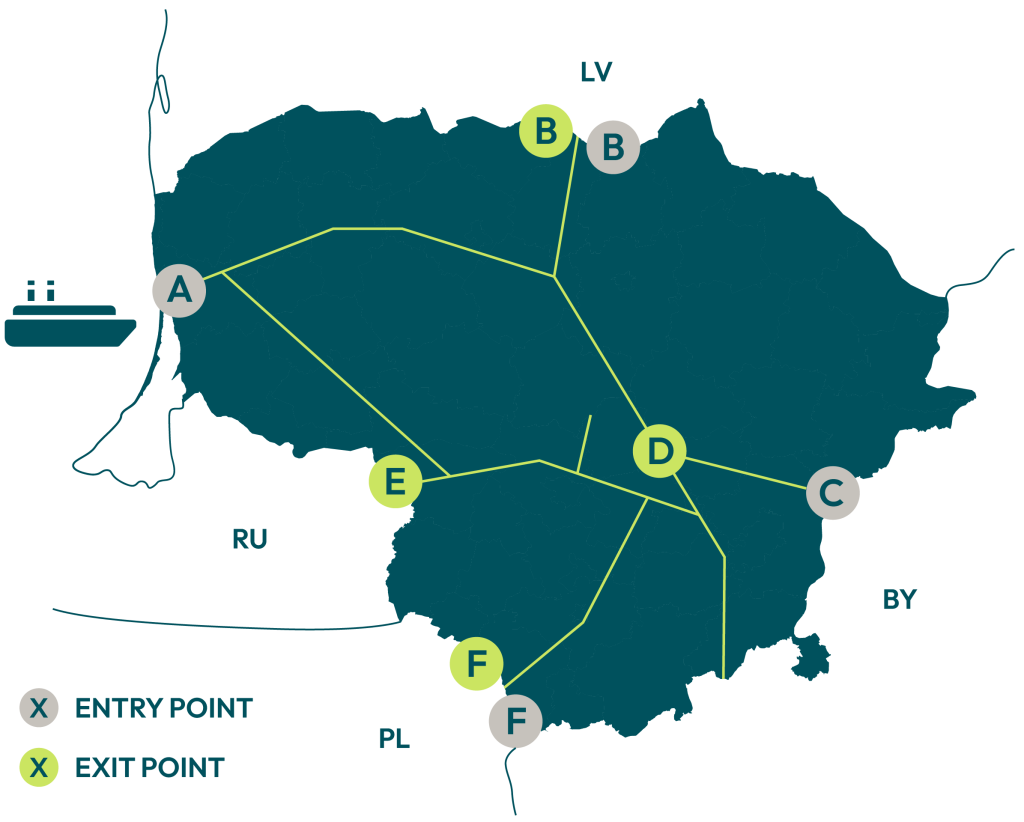
  • Entry Point A (2025)

At Entry Point A, AB Amber Grid applies a transmission fee set at 142.77 EUR/MWh/day/year (excluding VAT) for 2025, approved by NERC Resolution No. O3E-790 of 31 May 2024.

  • Domestic Exit Point D (2025)

For natural gas transmission through the Domestic Exit Point D, transmission system users are charged a three-component transmission fee*, as established by NERC resolutions. In addition, a Supply Security Charge set by NERC is applied.

By NERC Resolution No. O3E-1469 of 27 November 2024, the Supply Security Charge was set at 25.55 EUR/MWh/day/year (excluding VAT), applicable from 1 January 2025.

More information More information

Terminal schedules

The operation of the Klaipėda LNG terminal is planned and carried out in accordance with the schedules prepared by the terminal operator KN Energies.

Clients seeking partners for the delivery of a conventional LNG cargo to the Klaipėda LNG terminal may contact the Terminal Operator, who will share information on clients likewise searching for delivery partners, if such information is known to the Operator.

Schedules

Maintenance schedules

Information about Klaipėda LNG Terminal maintenance, planned operational restriction and other Inside information as per REMIT regulation are published on the GIE REMIT IIP (Inside Information Platform). KN Energies publishes the aforementioned information using Urgent Market Messages (UMM) on the GIE operated IIP.

Market participant ACER registration code – A0004797P.LT (AB “KN Energies”). EIC codes related – 21X0000000013740 (AB “KN Energies” LSO) and 21W0000000001253 (Klaipeda LNG Terminal FSRU Independence).

Baltic-Finnish region gas Transmission System Operators and LNG Terminal Operators have collaboratively prepared the Consolidated Maintenance plan for Baltic-Finnish region. Please find the plan  via the following links:

Regasified quantities

The Terminal operator publishes daily LNG quantity at the Terminal and transferred natural gas quantities on the GIE platform.

Amber Grid, the Lithuanian gas transmission system operator, publishes each Gas Days transferred natural gas quantities through Klaipėda GMS from Klaipėda LNG Terminal on ENTSOG transparency platform.

Available and allocated capacities

The Klaipėda LNG terminal ensures third-party access to its capacities: clients may acquire capacities on the primary and secondary markets. Interrupted LNG Terminal Capacities are not provided.

After the Annual Terminal Capacity Allocation Procedure, if Free Terminal Capacities remain, they may be acquired by any Applicant. The use of Free Capacities implies joint use of the Terminal, where Terminal Users borrow or lend LNG quantities so that several Users may utilise the Terminal simultaneously.

Allocated LNG Terminal Capacities in the Primary Market for 2025

Allocated Capacities Amount of Allocated Capacities, kWh Period
LNG regasification capacities 33 000 000 000 2025-01-01 – 2025-12-31
LNG reloading capacities 430 000 000 2025-01-01 – 2025-02-28
LNG reloading capacities 98 000 000 2025-01-01
LNG reloading capacities 100 000 000 2025-01-08 – 2025-01-28
LNG reloading capacities 98 000 000 2025-01-10
LNG reloading capacities 294 000 000 2025-02-27 – 2025-03-29
LNG reloading capacities 110 000 000 2025-02-06 – 2025-02-25

The Operator will publish the invitation to book Spot cargo capacities of the Terminal separately. Information about the allocation of Spot cargo capacities will be provided in the news section. Available Terminal capacities are provided in accordance with the terms and procedures set forth in the Regulations.

Archive of allocated LNG Terminal capacities for previous periods

Capacities Allocation in the Secondary Market

  • Terminal Users have the right to transfer Unused Capacities on the Secondary Market to other Terminal Users or persons meeting the requirements raised towards Terminal Users for a price no higher than the price paid for obtained capacities.
  • Terminal Users are themselves responsible for transfer of Unused Capacities.
  • Unused Capacities are transferred upon a decision made by the Terminal Users transferring the capacities with the Operator’s consent in accordance with the requirements provided in the Regulations.
  • If a Terminal User cannot itself find an entity willing to obtain Unused Capacities (all or their part) or if the Terminal User wishes for the Operator to organize and carry out the transferring of Unused Capacities, Terminal User informs the Operator accordingly.

Detailed information about capacity allocation in the secondary market can be found in section V of the Regulations.

Capacities being allocated in the Secondary Market:

  • Currently there are no capacities being allocated in the Secondary market.

LNG Carrier Approval Procedure

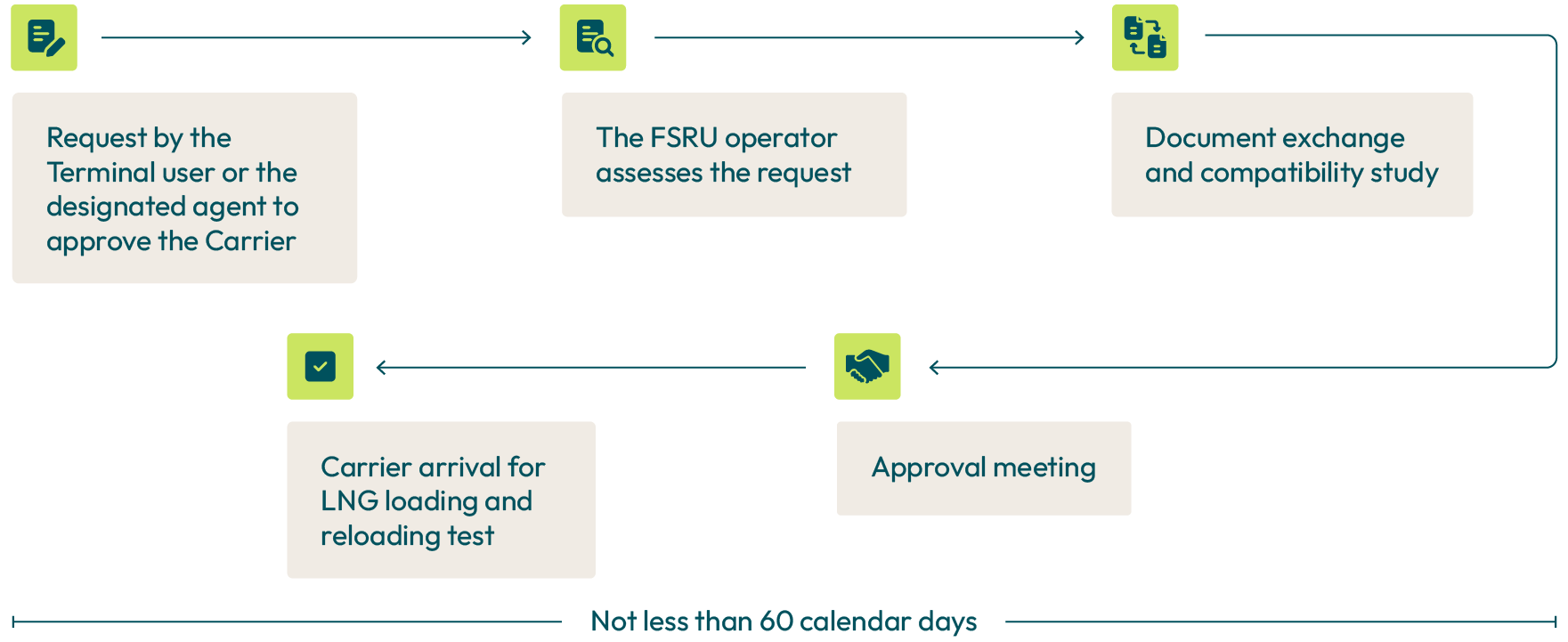
LNG carriers intended to berth at the Klaipėda LNG terminal must comply with all national and international standards applicable to such vessels, hold all permits required to enter and operate in the Port of Klaipėda, and meet all port operational conditions as well as the requirements set by KN Energies and the Port Authority.

The LNG Carrier approval request should be sent to SSCS@hoeghlng.com with a copy to LNGcommerce@kn.lt

A detailed LNG Carrier approval procedure explanation can be found in part 7.1 of the Regulations and Operator’s technical conditions.

Useful information for LNG carriers

The Terminal operator has prepared a Port Information booklet based on Klaipėda Port specificity (updated 30th December, 2024).

Technical characteristics of the Terminal

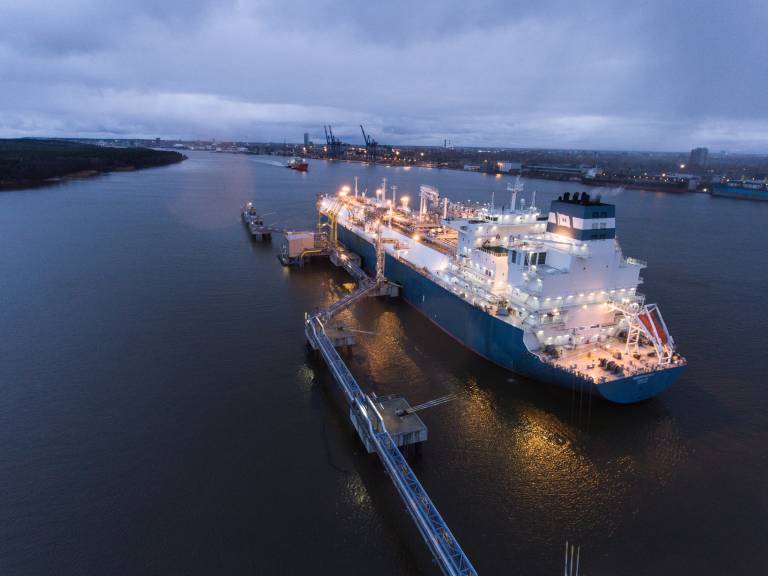
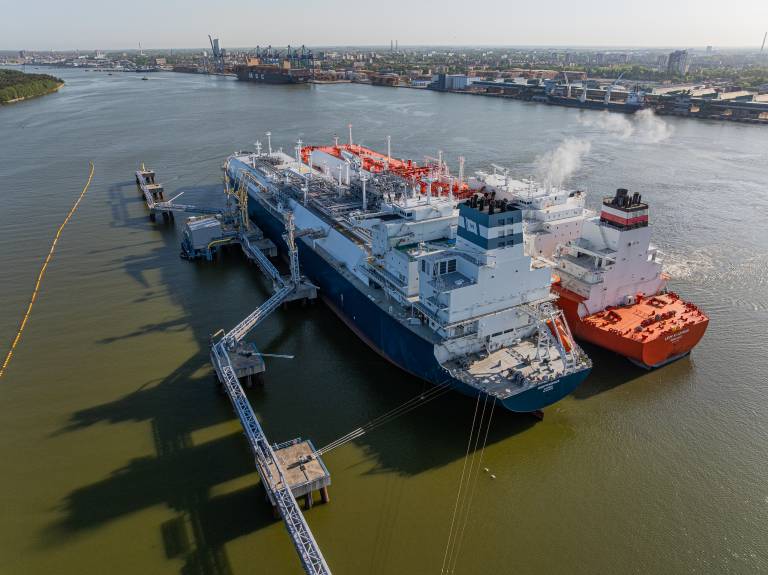
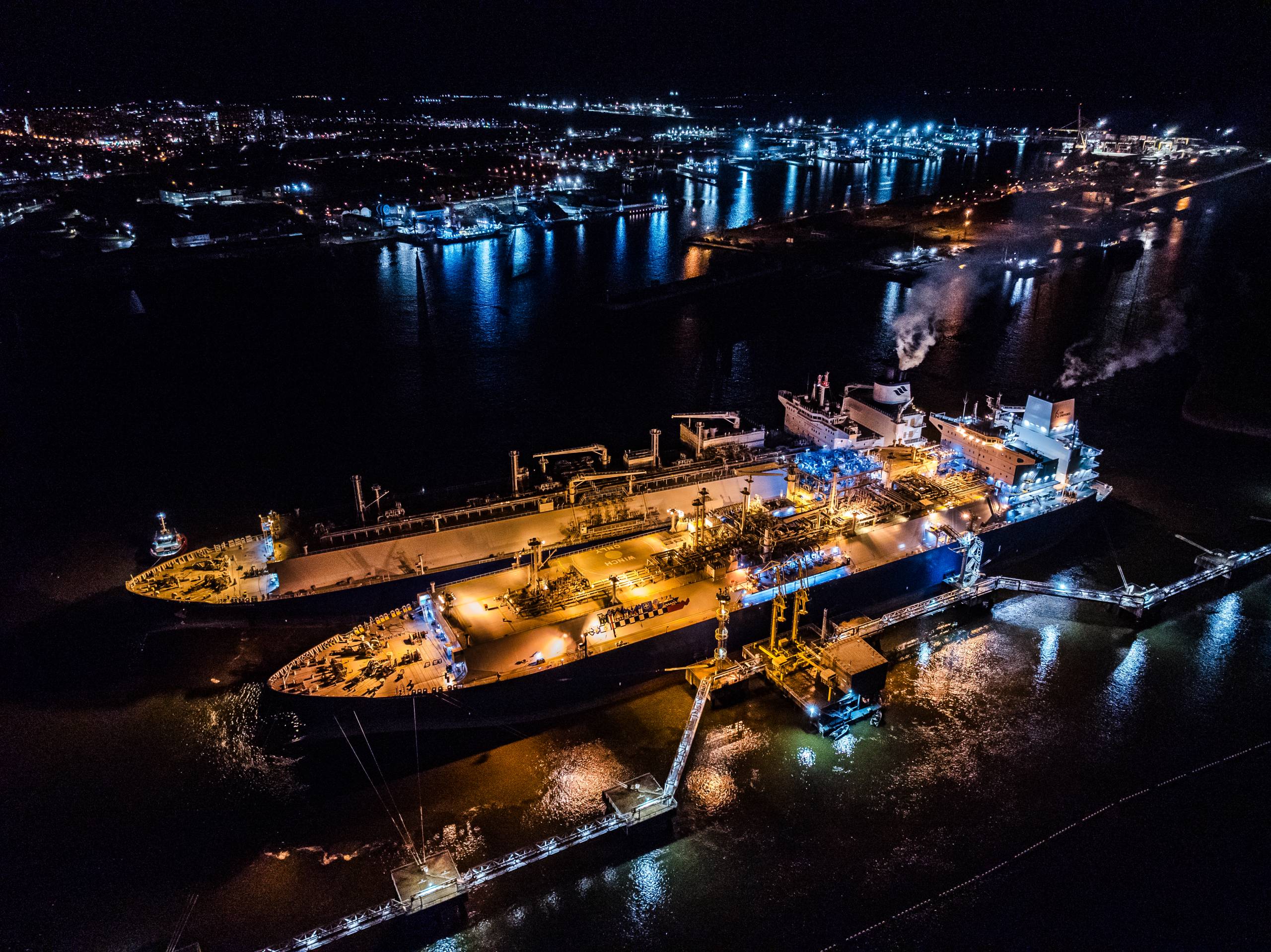
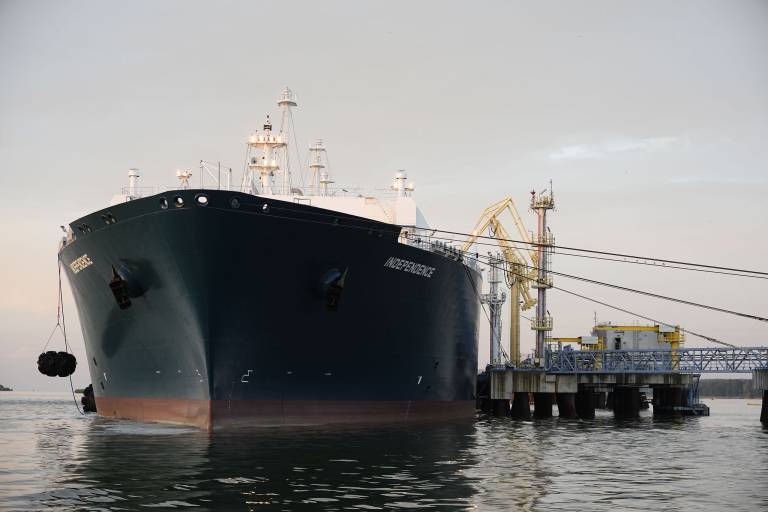
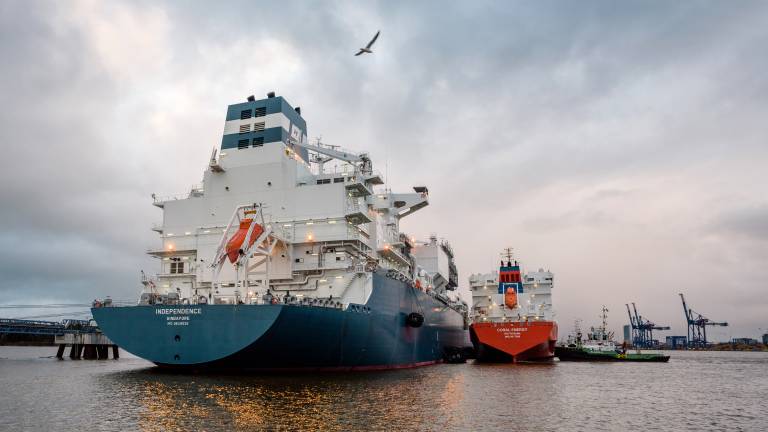
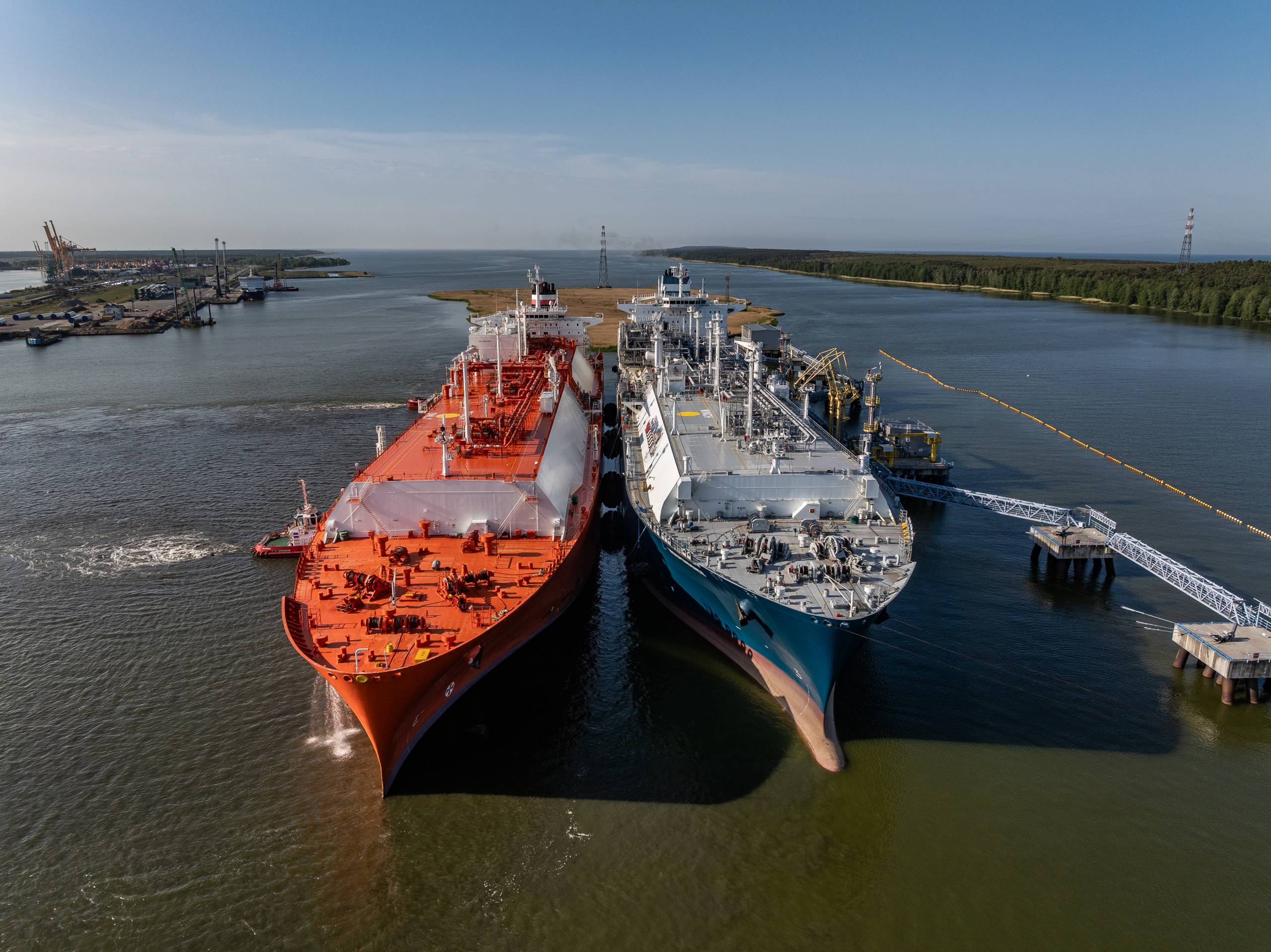
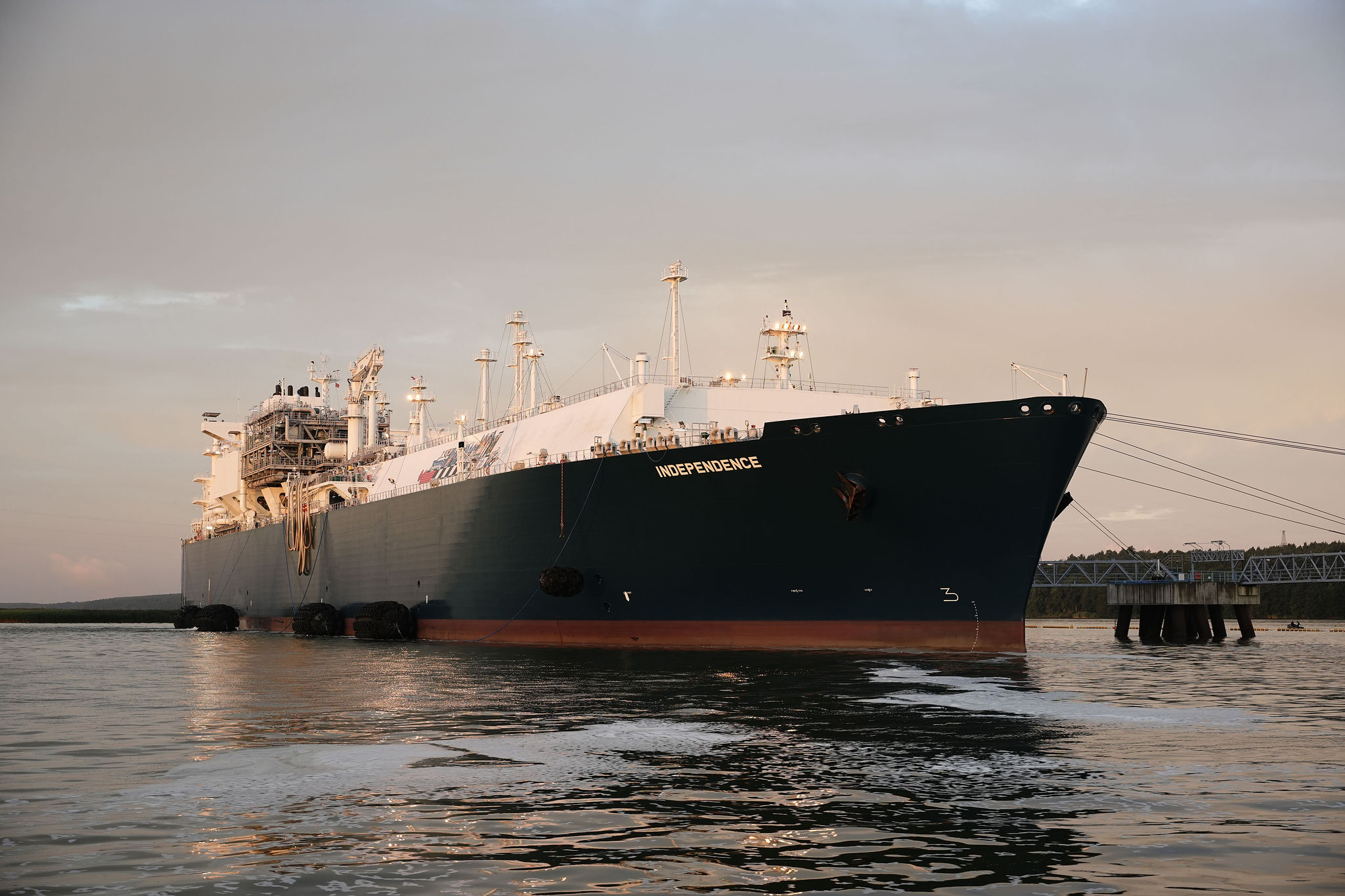
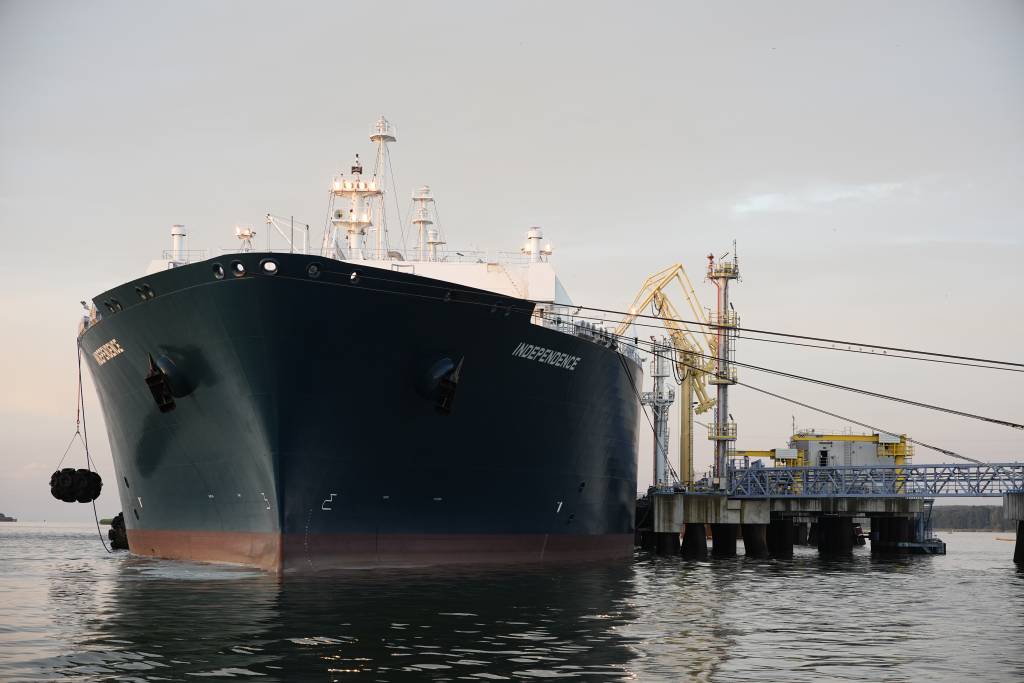
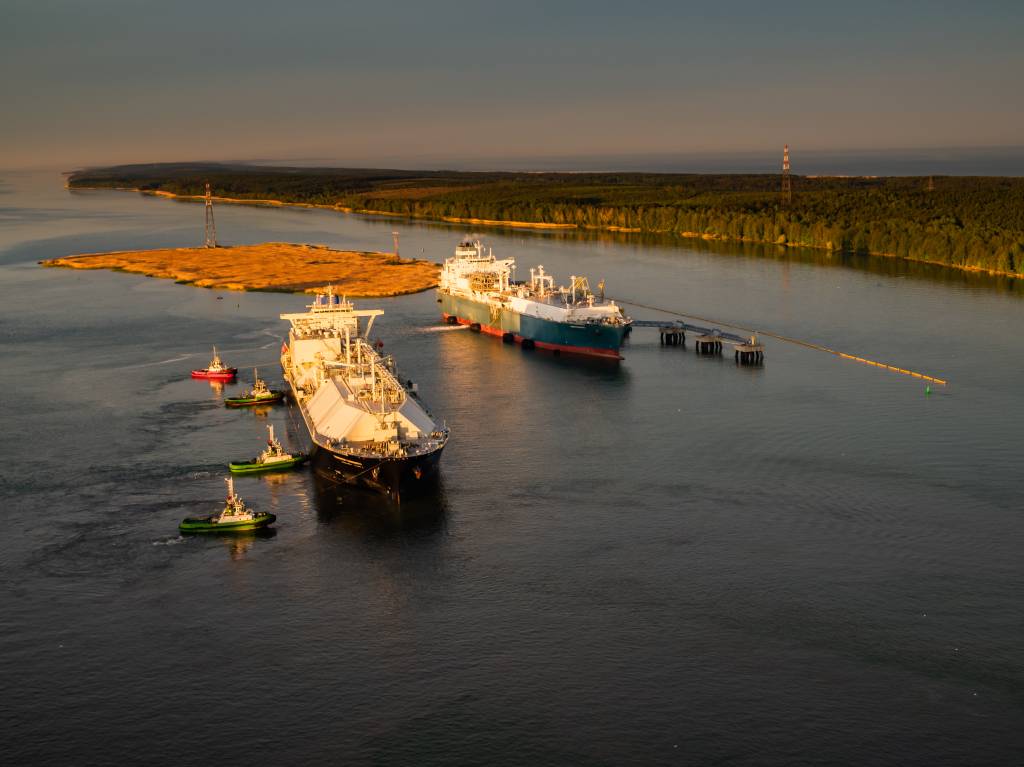
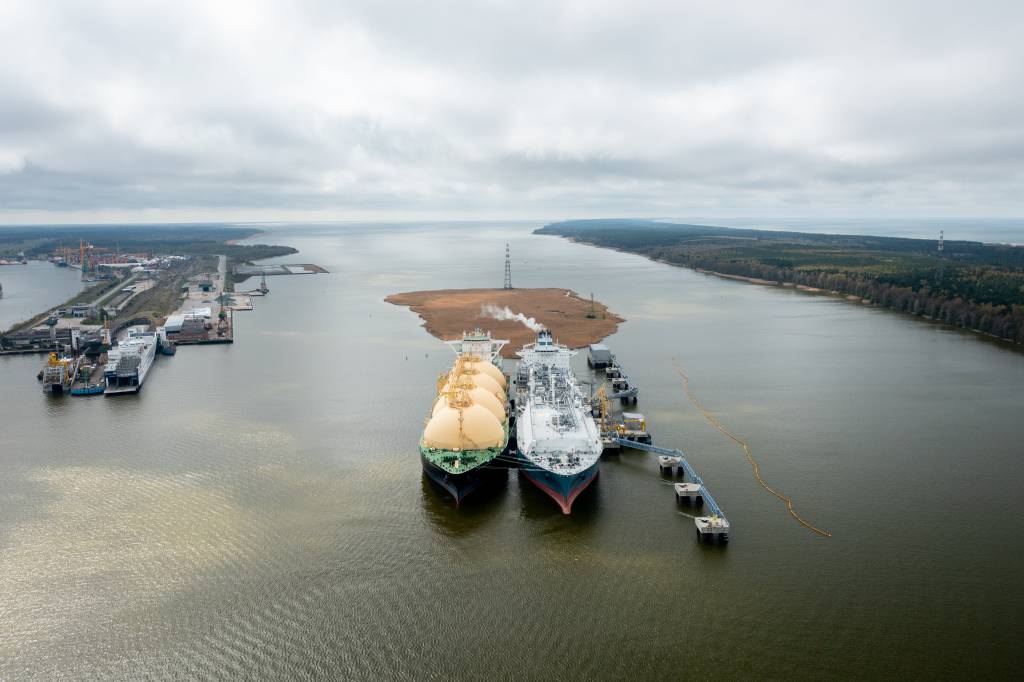
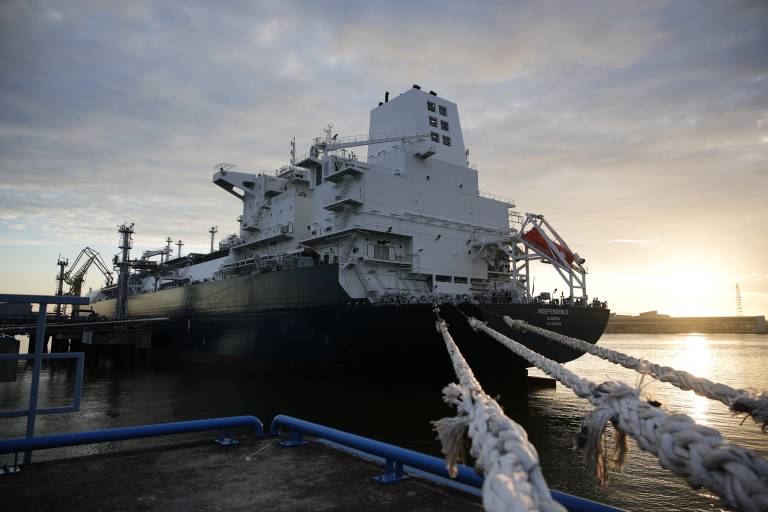
The Klaipėda LNG terminal consists of the floating storage and regasification unit (FSRU) Independence, a jetty, the connecting gas pipeline and the gas metering station. The FSRU Independence is permanently moored to the jetty and supplies gas to the natural gas transmission system.

The LNG FSRU Independence was built at the Hyundai Heavy Industries Co., Ltd shipyard in South Korea and has been owned by KN Energies since December 2024. Technical operation services for the FSRU are provided by Hoegh LNG Klaipėda UAB (acting as the managing partner in a joint venture with Höegh LNG Fleet Management AS).

CharacteristicsIndicator
FSRU OwnerKN Energies, AB
FSRU Technical OperatorHoegh LNG Klaipėda UAB, acting as the managing partner in the joint venture agreement together with Höegh LNG Fleet Management AS
Terminal’s technological capacity
(LNG regasification)
Up to 10.281.552 m3 of natural gas per day
Total capacity of LNG tanks170,000 m3
Maximal LNG filling level98% at 70 kPag
Minimal operational LNG heel level3,500 m3 LNG
Maximal LNG load rate Maximal LNG reloading rate when LNG regasification is performed during LNG reloading Maximal LNG reloading rate when LNG regasification is not performed during LNG reloading9,000 m3 LNG/ h via all flexible LNG loading hoses 5,000 mLNG/ h via all flexible LNG unloading hoses 9,000 mLNG/ h via all flexible LNG unloading hoses  
Maximal LNG regasification rate428,398 m3/ h
Minimal LNG regasification rate57,089 m3/ h
Maximal capacity of an LNG carrier performing LNG load, unless agreed otherwise160,000 m3
Minimal capacity of an LNG carrier performing LNG load, unless agreed otherwise65,000 m3
Maximal capacity of an LNG carrier performing LNG reload, unless agreed otherwise65,000 m3
Minimal capacity of an LNG carrier performing LNG reload, unless agreed otherwise5,000 m3

Note No.1 Technical characteristics of the Terminal are indicated at reference conditions: combustion/measurement temperature – 25/0 °C, pressure – 1,01325 bar.
Note No.2 LNG Regasification Capacities cannot be higher than the maximum natural gas transmission capacities established by the Transmission System Operator at the point connecting the Terminal to the Transmission System.
Note No.3 Detailed Technical Characteristics of the Terminal are provided in the Operator’s Technical Conditions.

Calculations of technical regasification capacities

  • Limits of LNG regasification modes, considering capacities of LNG Terminal, are from 57,089 nm3/h to 428,398 nm3/h;
  • Maximum technical capacity of LNG regasification is 3.752.766.480 nm3 per year (calculated when the Terminal is operating 24 hours a day, 7 days a week, excluding circumstances limiting the Terminal‘s operation).
  • LNG Regasification Capacities cannot be higher than the maximum natural gas transmission capacities established by the Transmission System Operator at the point connecting the Terminal to the Transmission System.
  • Until 2015 October – 165,771 nm3/h;
  • Since 2015 October (after construction of the Klaipėda – Kuršėnai gas pipeline) – 428,398 nm3/h;

Note: Technical characteristics of the Terminal are indicated at reference conditions: combustion/measurement temperature – 25/0 °C, pressure – 1,01325 bar.

The latest technical capacities of the Transmission System, as well as the minimum, maximum, booked and available transmission capacities at the point of connection of the Terminal to the main gas pipeline can be found on the web page of AB “Amber Grid” by selecting Klaipeda GMS.

Calculation of reload technical capacities

  • Maximal LNG reloading rate when LNG regasification is performed during LNG reloading is 5,000 m3 LNG/ h via all flexible LNG unloading hoses.
  • Maximal LNG reloading rate when LNG regasification is not performed during LNG reloading is 9,000 m3 LNG/ h via all flexible LNG unloading hoses.

Technical capacities are restricted during maintenance based on maintenance schedule.