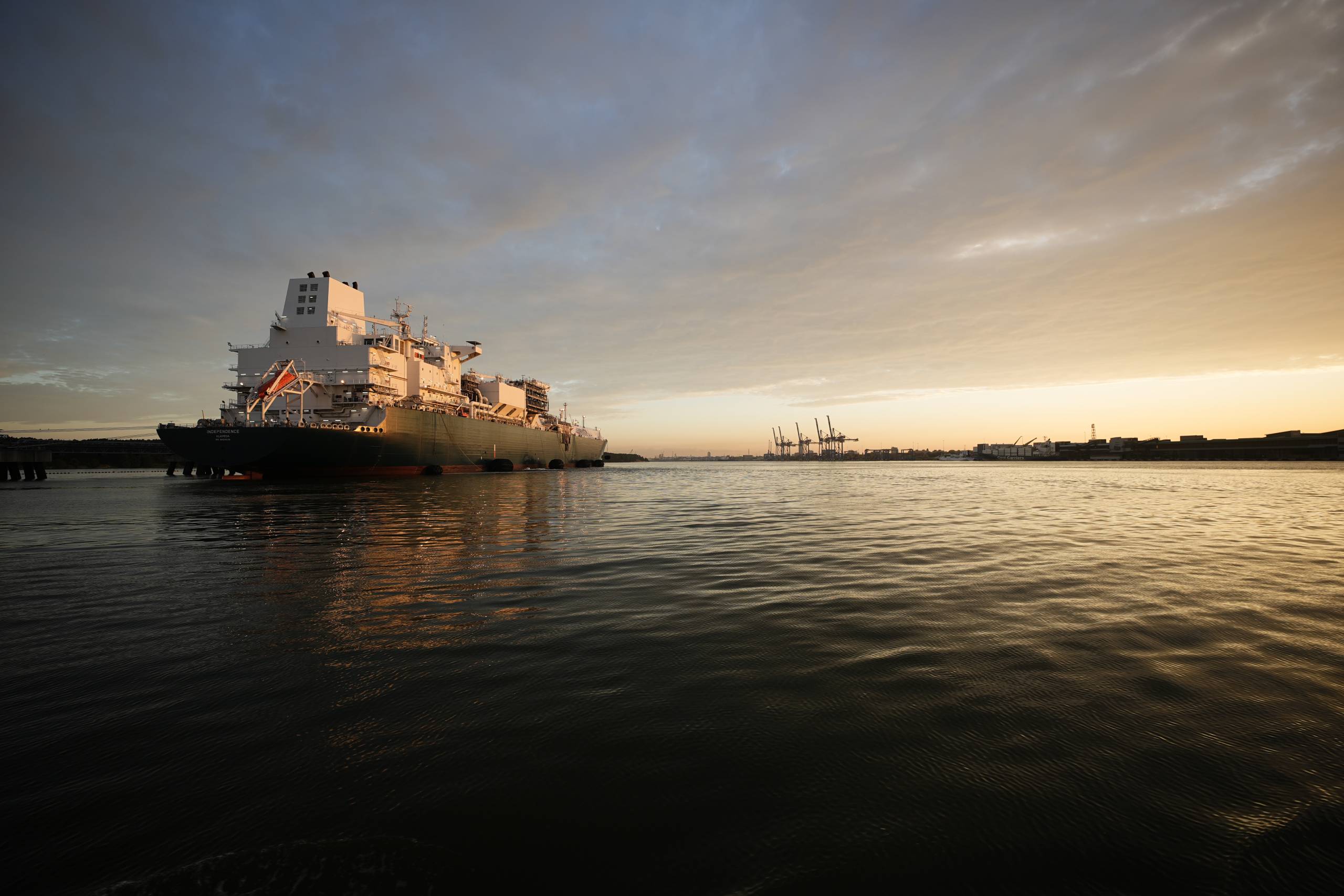
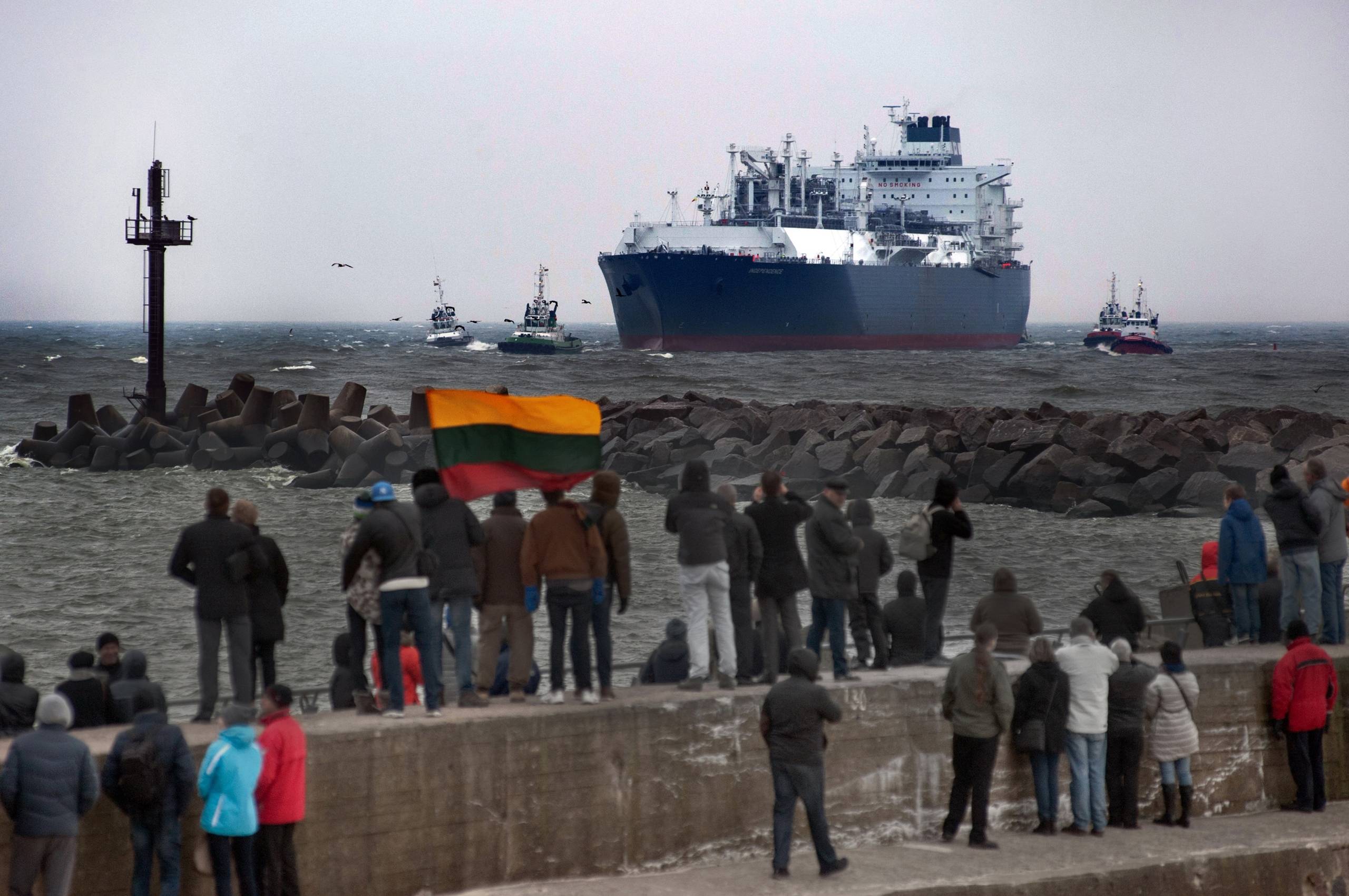
The Klaipėda Liquefied Natural Gas (LNG) terminal is one of the key national facilities ensuring energy security. It created the conditions for the emergence of a natural gas market in Lithuania and opened up the possibility for the state and its citizens to import natural gas from all over the world.
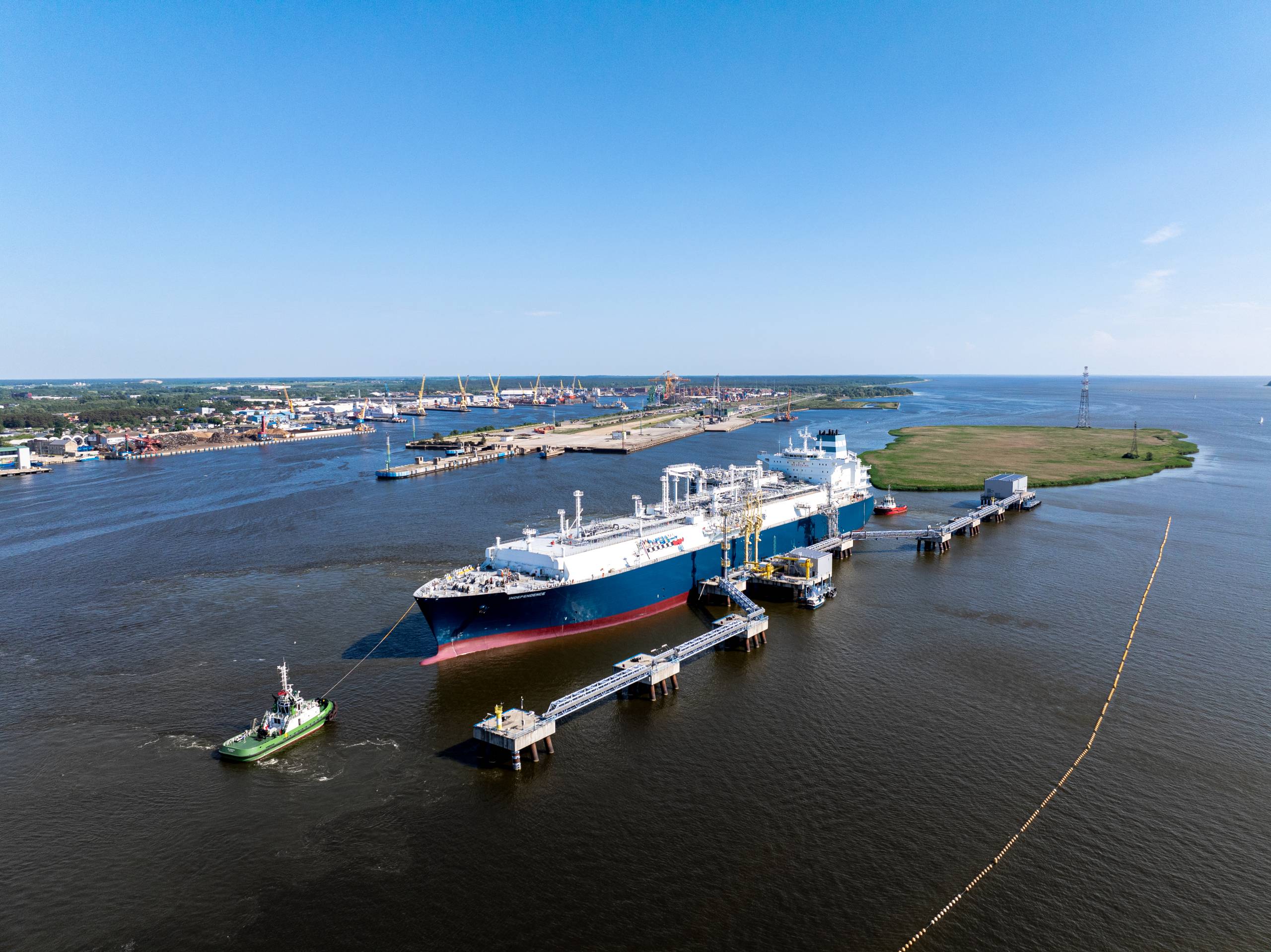
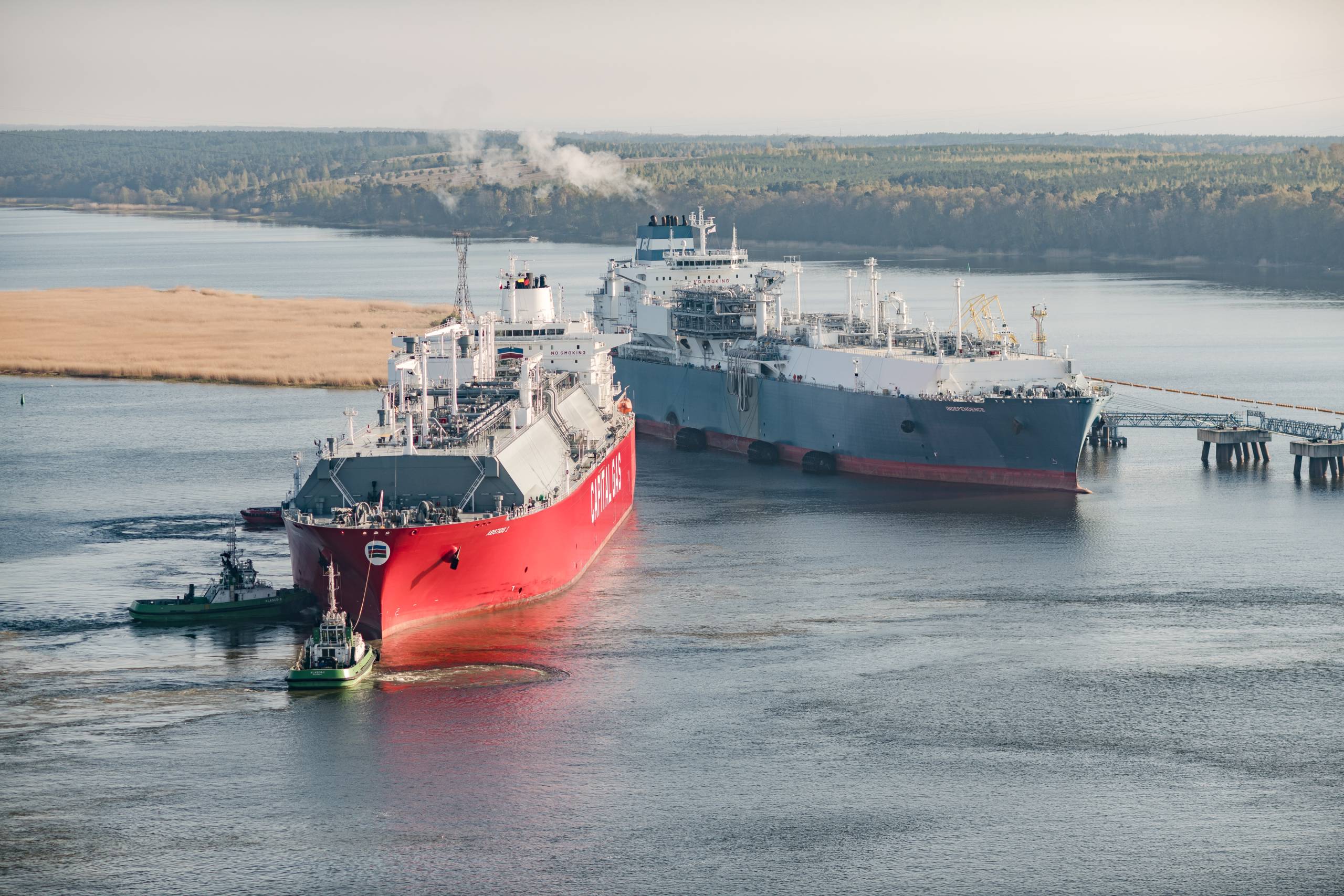
The Klaipėda LNG terminal operates in the southern part of the Port of Klaipėda, in the Curonian Lagoon near Kiaulės Nugara Island.
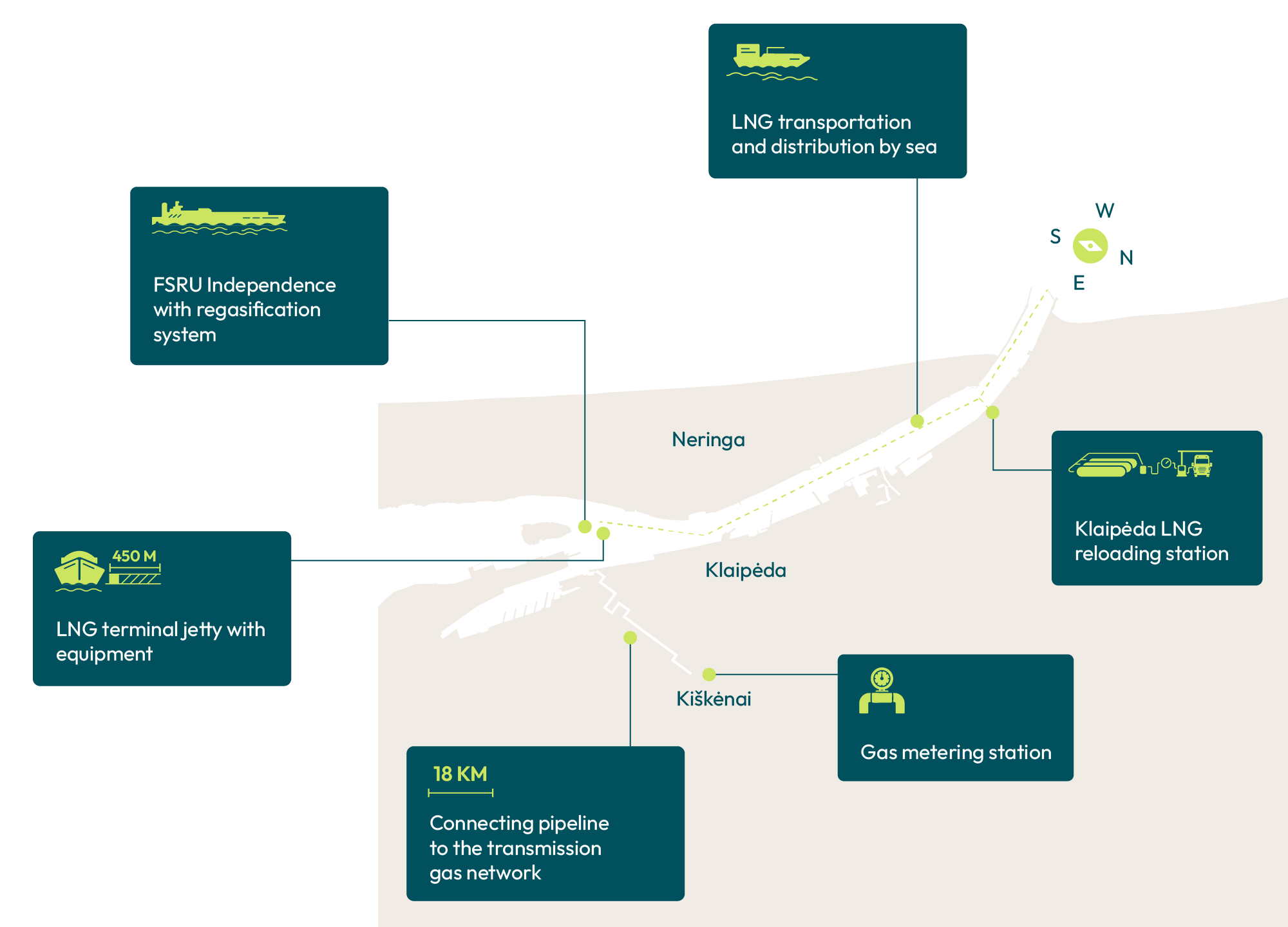
What are the main components of the Klaipėda LNG terminal?
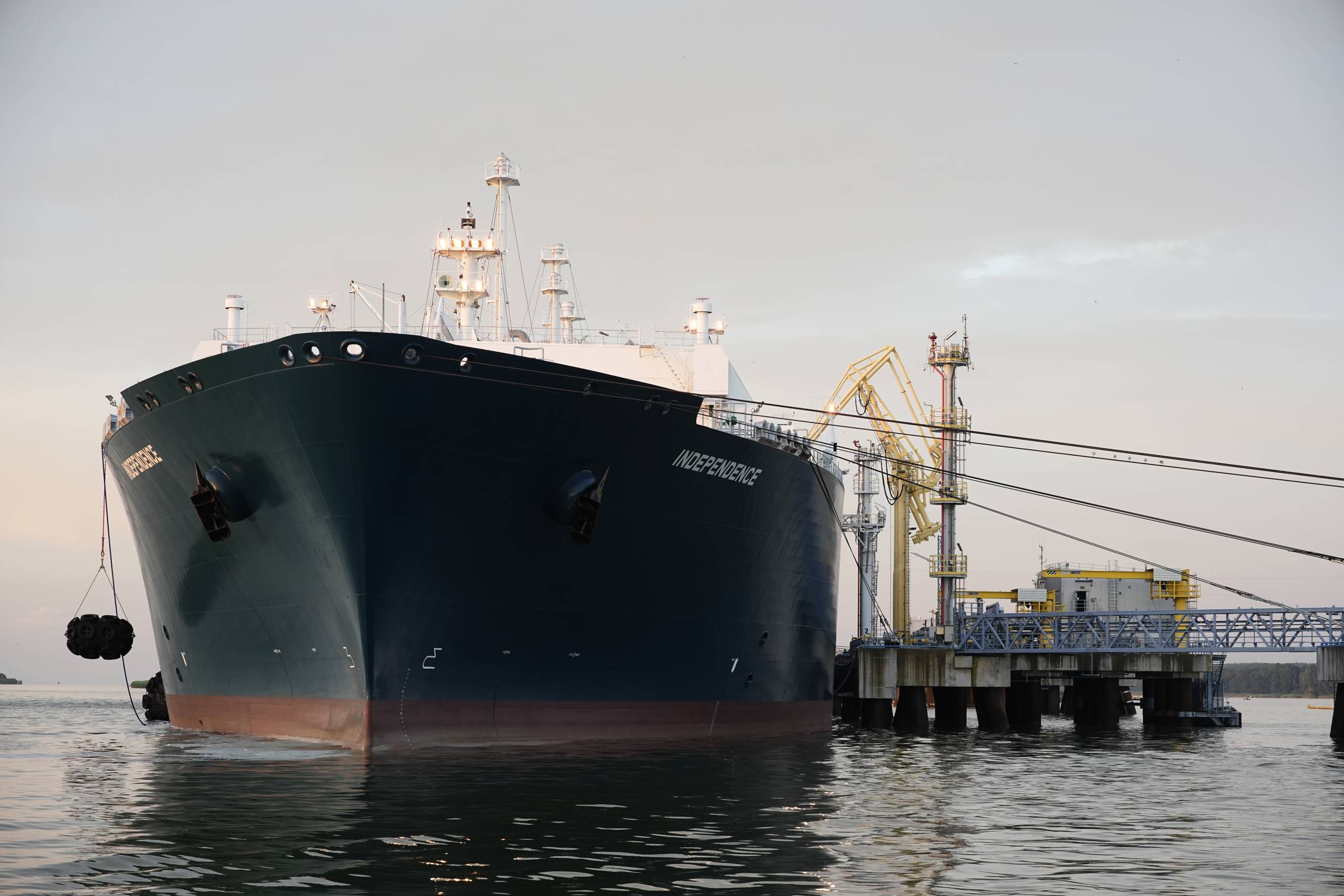
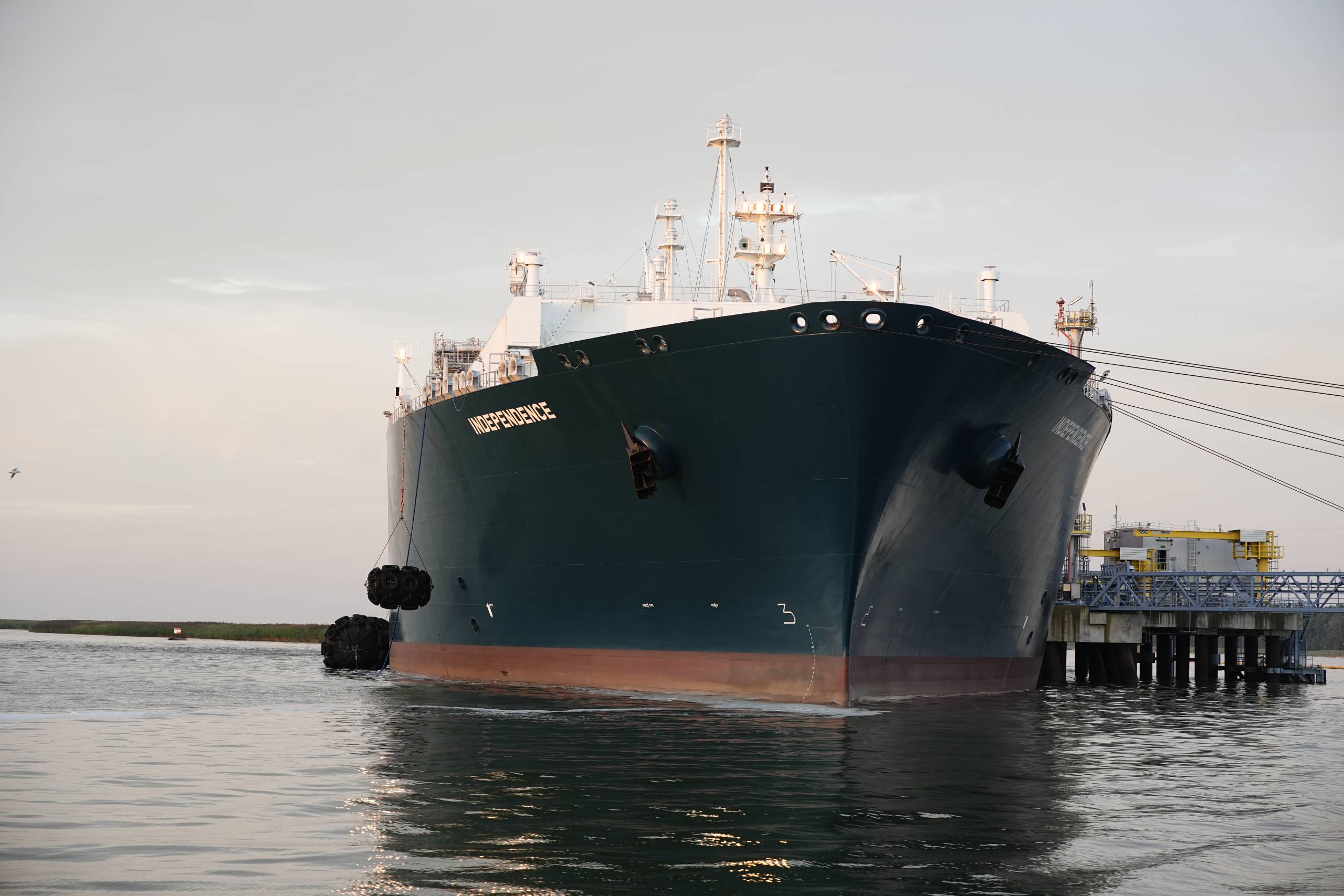
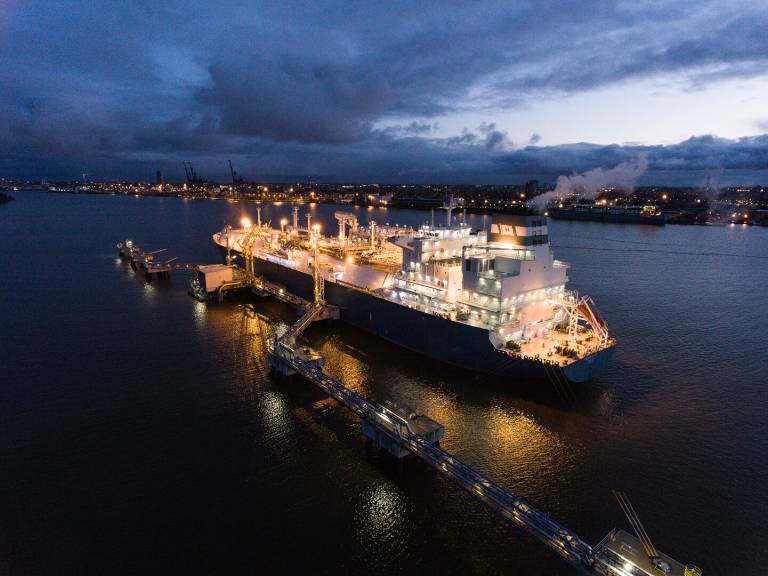
FSRU Independence – a 170,000 m³ floating storage and regasification unit (FSRU) with onboard regasification equipment that converts LNG from liquid to gaseous state.
A 450-metre jetty for berthing the FSRU.
An 18 km high-pressure connecting pipeline (including 3 km beneath the Curonian Lagoon), 700 mm in diameter, linking the FSRU with the gas metering station in Kiškėnai.
The Klaipėda LNG value chain is complemented by the Klaipėda LNG reloading station – five 1,000 m³ onshore storage tanks to which LNG is delivered from Independence and then distributed by LNG trucks or reloaded onto vessels.
The Klaipėda LNG terminal was developed to safeguard national energy security – to reduce dependence on the former single gas supply source from the East, to enable natural gas imports by sea from other countries, and to foster the development of a regional gas market.
The project was launched on the basis of the National Energy Strategy approved in 2007, and in 2010 the Government of the Republic of Lithuania endorsed that AB “Klaipėdos nafta” should start preparing the LNG terminal project and become the organiser responsible for drawing up the special plan for the terminal, related infrastructure and gas pipeline.
Interested in the services of the Klaipėda LNG terminal or looking for information for clients?
More detailed information on the services provided at the Klaipėda LNG terminal, applicable regulations, becoming a terminal user and other operational information is available here.
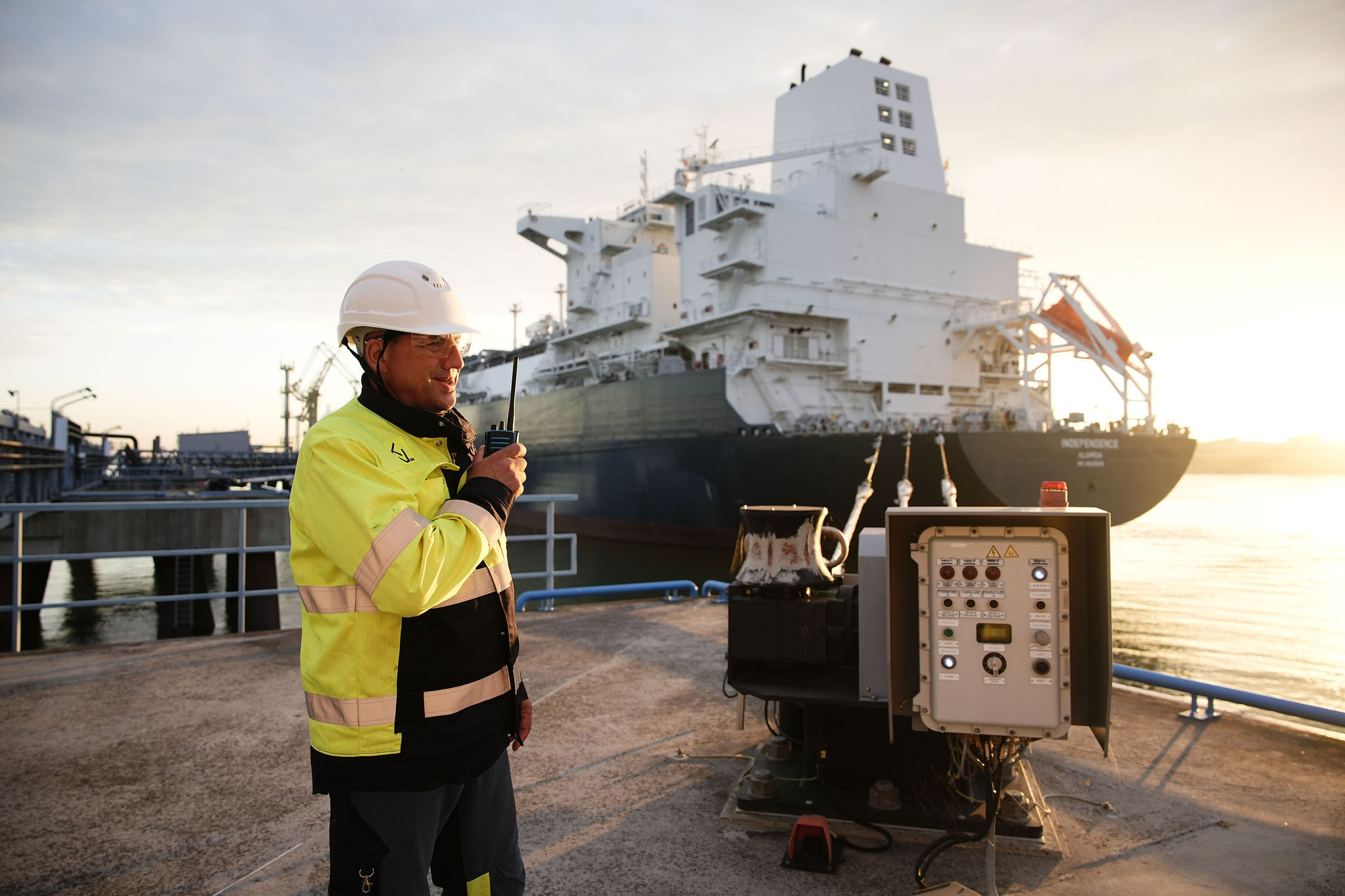
The Klaipėda LNG terminal consists of the floating storage and regasification unit (FSRU) Independence, the jetty, the connecting gas pipeline and the gas metering station. The FSRU Independence is permanently moored at the jetty and supplies natural gas into the gas transmission system.
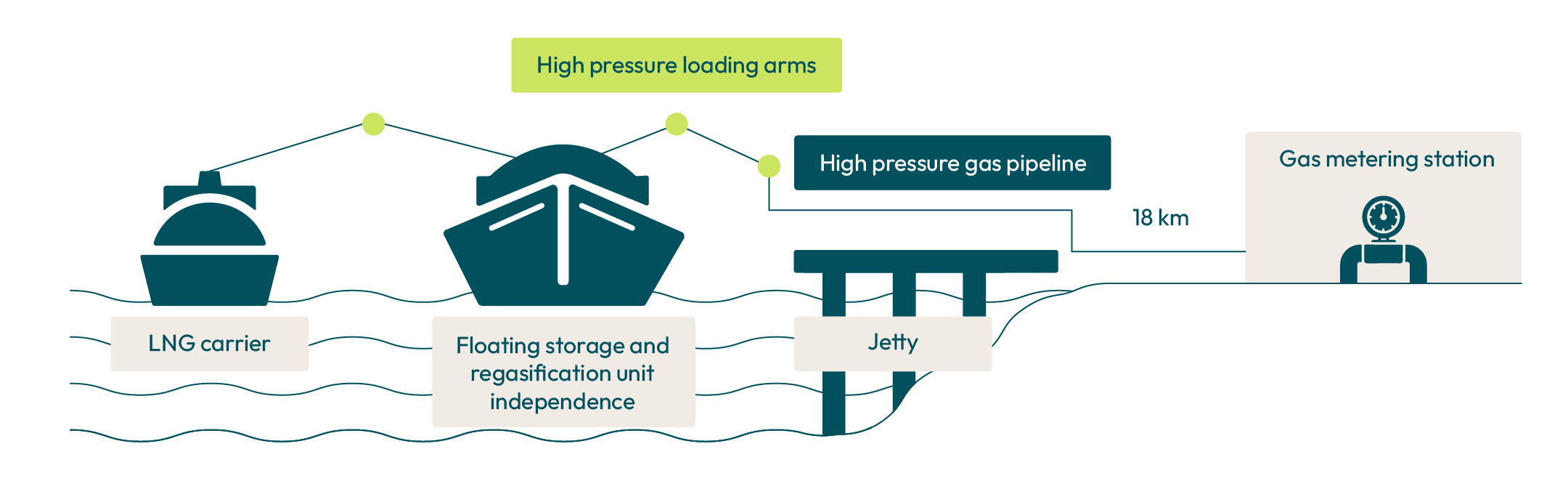
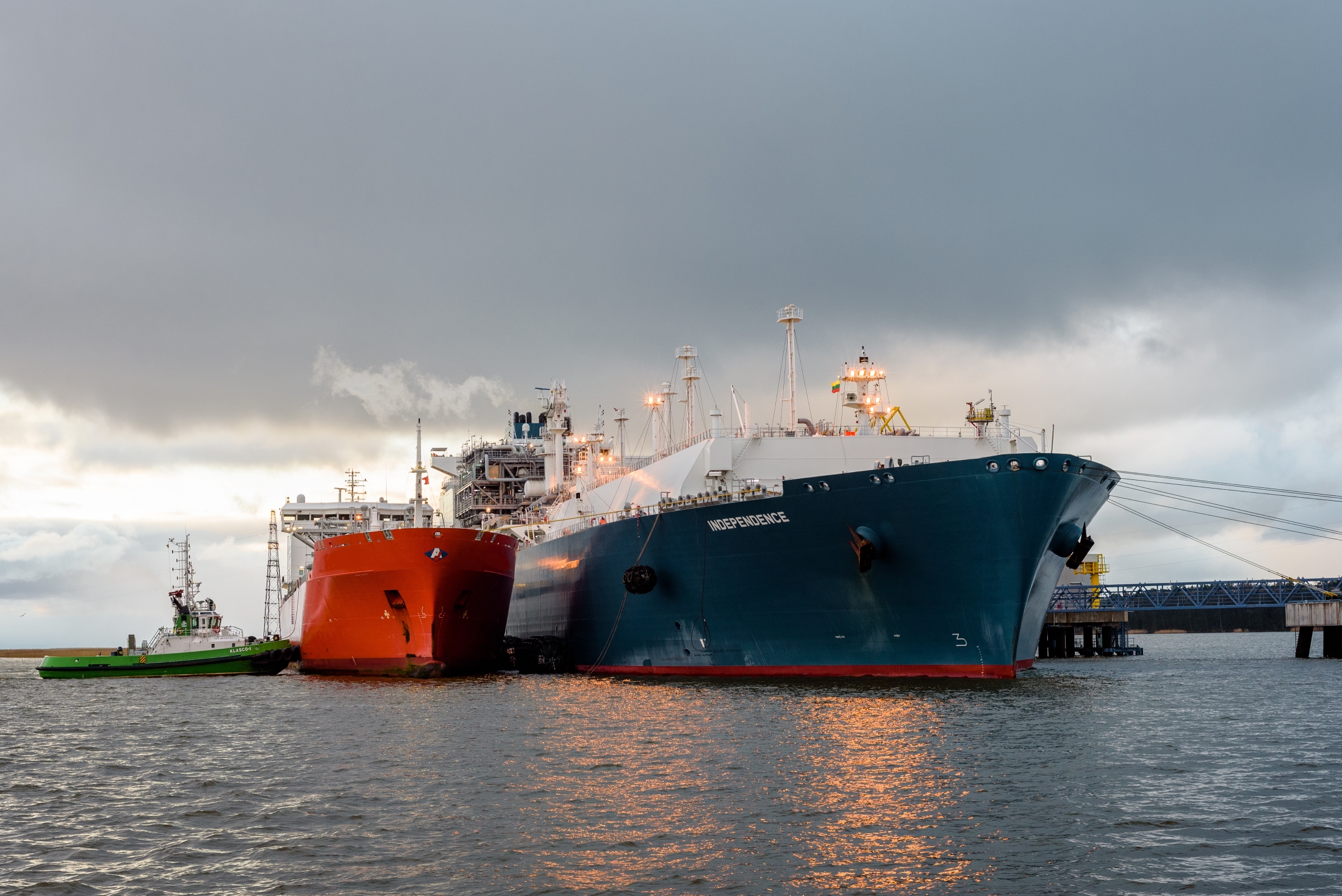
The FSRU is an LNG carrier which, in the Klaipėda State Seaport, receives LNG from incoming LNG carriers and can reload LNG onto LNG carriers calling at the terminal. LNG is converted back into gaseous form using the heat exchangers of the FSRU.
Incoming LNG carriers berth on the starboard side of Independence. The terminal jetty is 450 metres long and consists of three mooring points and six quick-release hook berthing points, servicing and high-pressure platforms, and connecting bridges. Special equipment is installed on the jetty, such as fire safety towers and a fire extinguishing system, maintenance cranes, high-pressure loading arms, quick-release rope hooks, electric generators and other equipment.
An almost 18 km long connecting gas pipeline has been laid from the LNG terminal jetty to the gas metering station of Amber Grid, the Lithuanian gas transmission system operator. The natural gas regasified at the terminal is metered at this station, where gas metering equipment is installed. From the gas metering station, the gas is fed into Lithuania’s main gas transmission pipeline network.
Liquefied natural gas (LNG) is a clear, colourless, non-toxic and non-explosive liquid produced by cooling natural gas to –162 °C. During this cooling process, the volume of the gas decreases by a factor of about 600, enabling easier and safer storage and transportation.
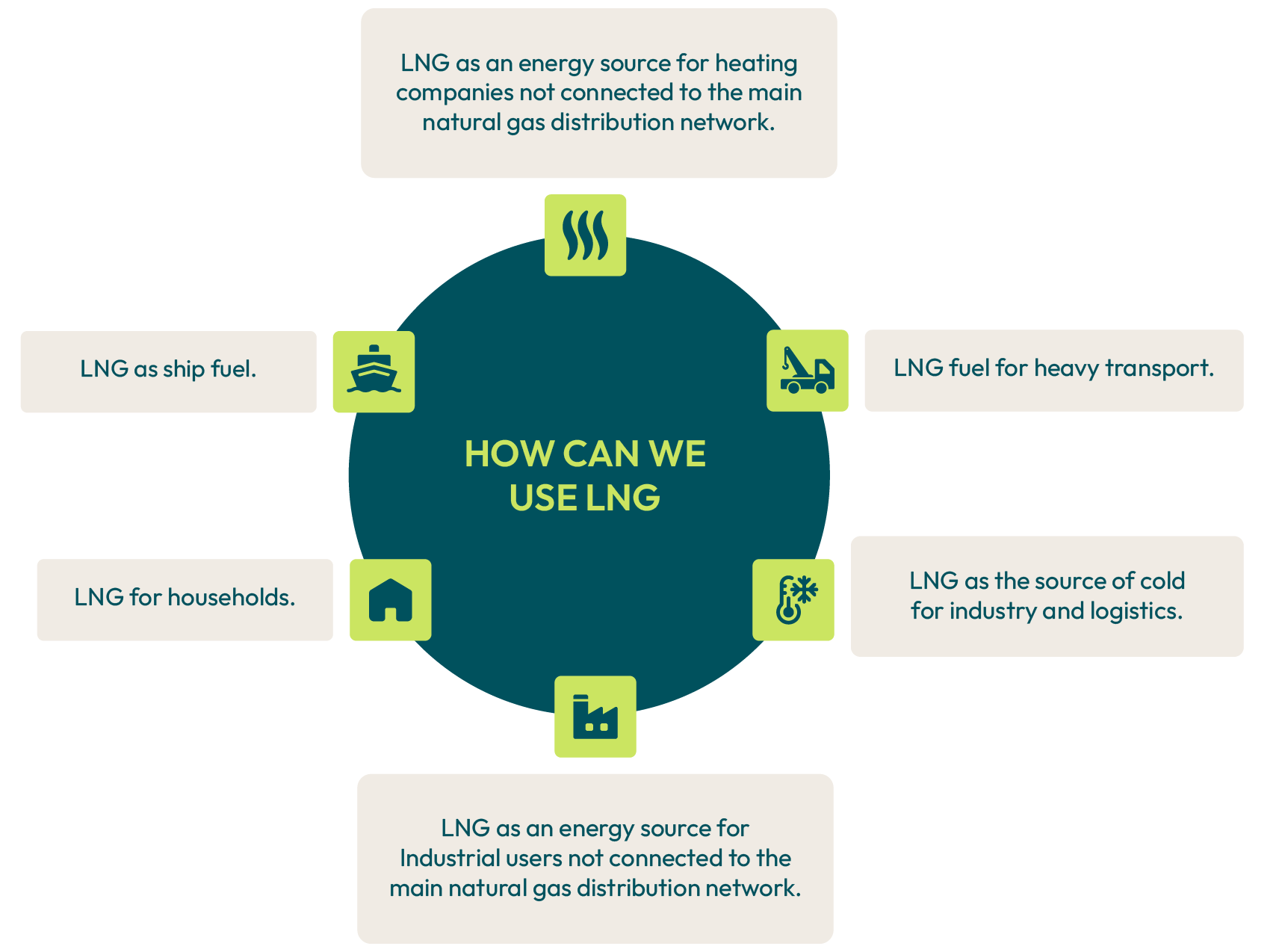
Once delivered to its destination, LNG is converted back into gaseous form in regasification facilities and supplied through pipelines to households, businesses and industry, where it is used for heat or electricity generation. Today LNG is becoming an economically competitive, cleaner fuel, and the infrastructure of the Klaipėda LNG value chain enables the use of clean fuel in shipping and heavy road transport.
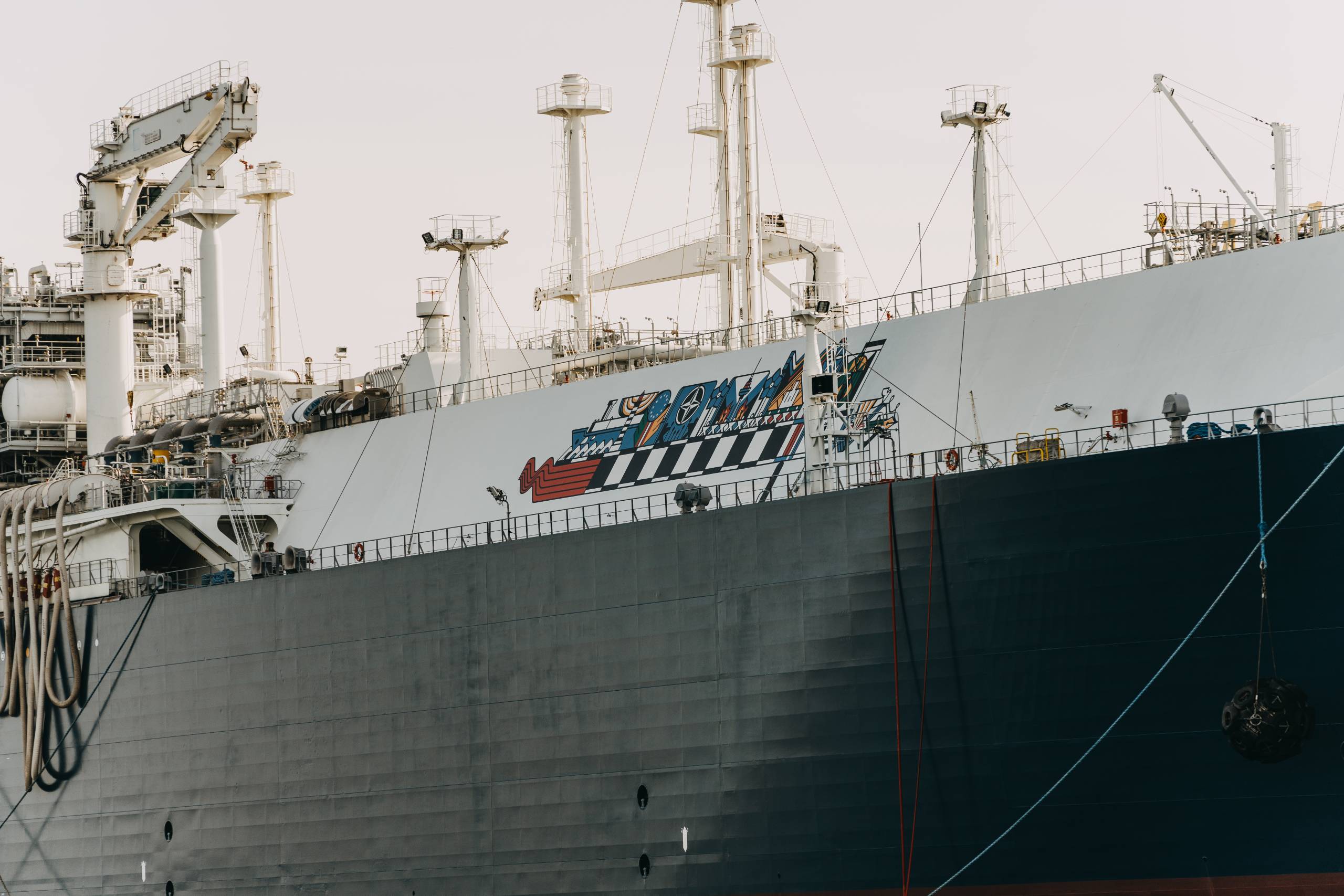
At the end of 2024, as the FSRU Independence of the Klaipėda LNG terminal came under Lithuanian ownership, it became an even stronger guarantor of our country’s freedom, while simultaneously symbolizing the path of freedom that Lithuania has taken.
To mark the terminal’s decade of operation in Lithuania and the beginning of a new stage in its journey, the hull of Independence has been adorned with a unique weathervane, specially designed for this occasion and inspired by the folk-art traditions of the coastal areas of the Curonian Lagoon.
The choice of the weathervane as the symbol of Independence is no coincidence. It is a unique heritage object for the Lithuanian seaside – similar folk art are not found anywhere else in the world.
The history of weathervanes characteristic of the Curonian Spit region dates back to the 19th century. On the roofs of houses or on the mast of ships, the owner used to encode his surroundings, his dreams, hobbies, values, a specific story, a narrative in the weathervane.
The Weathervane of Freedom on the Independence retains the form of the traditional Curonian Spit weathervane, but its modern symbols tell the story of Lithuania’s freedom and signify the nation’s uncompromising pursuit of freedom, both political and energy.
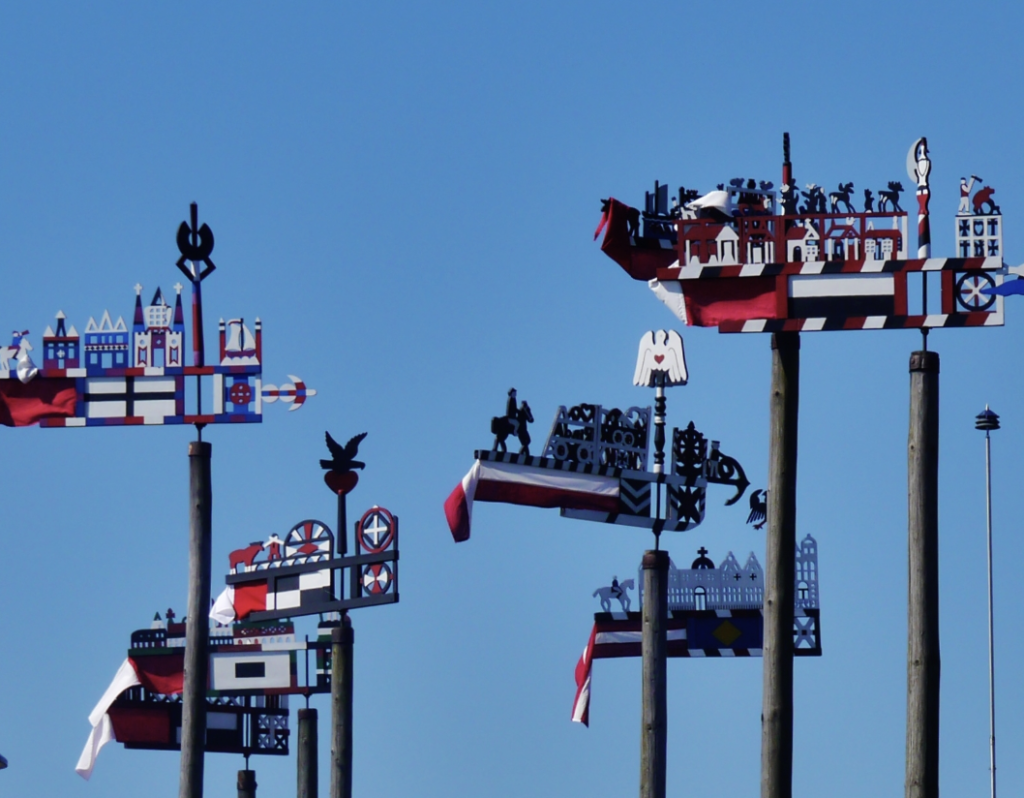
Find out more about the elements of the Weathervane of Freedom by tapping them.


On Monday, a liquefied natural gas (LNG) cargo from the United Stats of America ordered by D.TRADING International SA, a subsidiary of DTEK Group, the largest private Ukrainian energy company, reached the Klaipėda LNG terminal operated by the international terminal operator KN Energies. Approximately 160 thousand cubic metres of U.S….

Klaipėda LNG terminal operator, SC KN Energies (hereinafter referred to as the Company), informs natural gas market participants about the planned allocation of SPOT LNG cargo capacity of the LNG terminal under the conditions specified below. The Company, taking into account the provisions of the Regulations for the Use of…
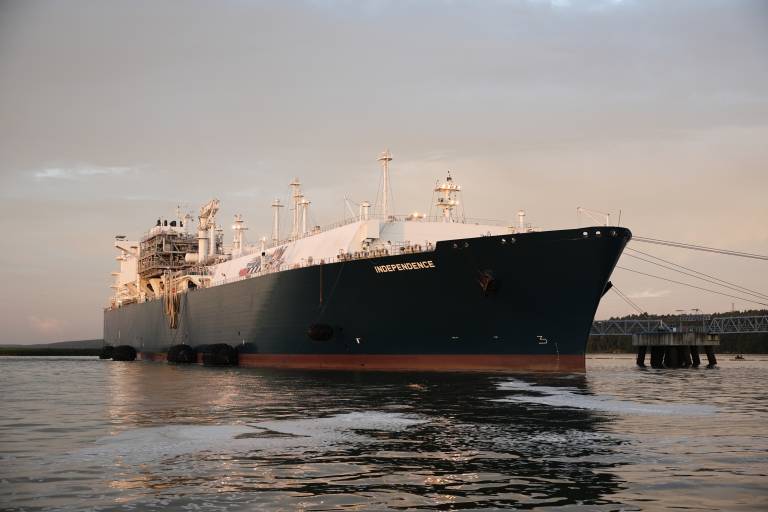
Exactly 11 years ago, on 27 October 2014, the liquefied natural gas (LNG) floating storage and regasification unit (FSRU) Independence reached the Port of Klaipėda. Lithuania’s liberation from the grip of a monopolist became not only an inspiration for the Baltic region but also ensured energy security and the right for consumers…

Whether you need handling, distribution, storage or operational support, our team is ready to assist you from the very first step.
Consult with our experts Consult with our experts